Georgia Scherman Projects Gallery
October 20 – November 26, 2011
Toronto based artist Tony Scherman is best known for his perfection of the encaustic technique; a painstaking and challenging process involving the dripping of wax, one colour at a time, directly onto canvas. Black October features thirteen pieces, consisting of large-scale encaustic paintings some combining the technique with oil pastel. It is not the technical skills displayed in these paintings however, that captures the viewers interest but rather the exploration of a narrative based on the October Crisis. Despite the weakness in metaphorical allusion, Scherman’s paintings still manage to capture his view on this important aspect of Canadian history, based substantially on Pierre Trudeau, his influences and to some extent personal life.
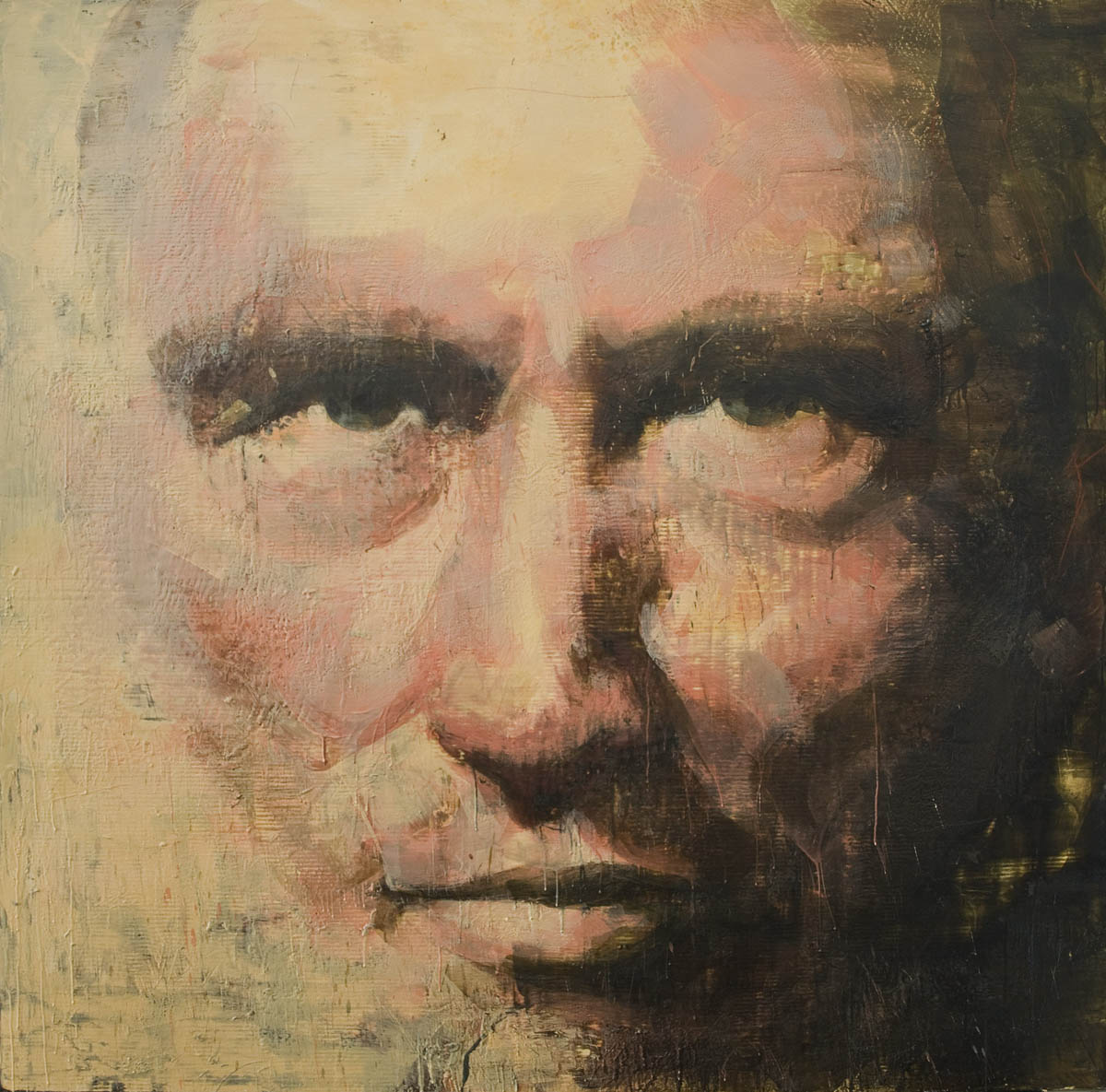 Trudeau, 2010-11, encaustic, oil pastel on canvas, 84 x 84 in. Courtesy of Georgia Scherman Projects, Toronto
Black October can be seen as a response, reflection and personal interpretation of the series of events that happened in the month of October 1970, an episode called the ‘October Crisis’. In the press release by Georgia Scherman Projects, the essential understanding behind Black October is stated: “Scherman imagines a broad historical and social context for Trudeau’s authorization of the War Measures Act.” What makes this episode powerful and emotional in Scherman’s view?
Fear, love, brutality, death and ego are the dominant themes of this exposition and transcend into the physicality of the artworks. It could be the large round eyes and sullen pout in Pierre Trudeau’s portrait that lead us to associate his persona with a distinct egotism. Imaginably, it could be the quiet smugness brought out by the partial exposure of Barbara Streisand’s face that leads us into the realms of Trudeau’s love life, making it a source of influence in the eyes of Scherman. The face of Machiavelli together with the presence of Karl Marx proceed to make this narrative dark or perhaps furtive giving us reasons to believe that the October Crisis was much more than just a public scandal: rather it was a result of several factors and historical influences. One could say that Trudeau is represented as Canada’s Napoleon.
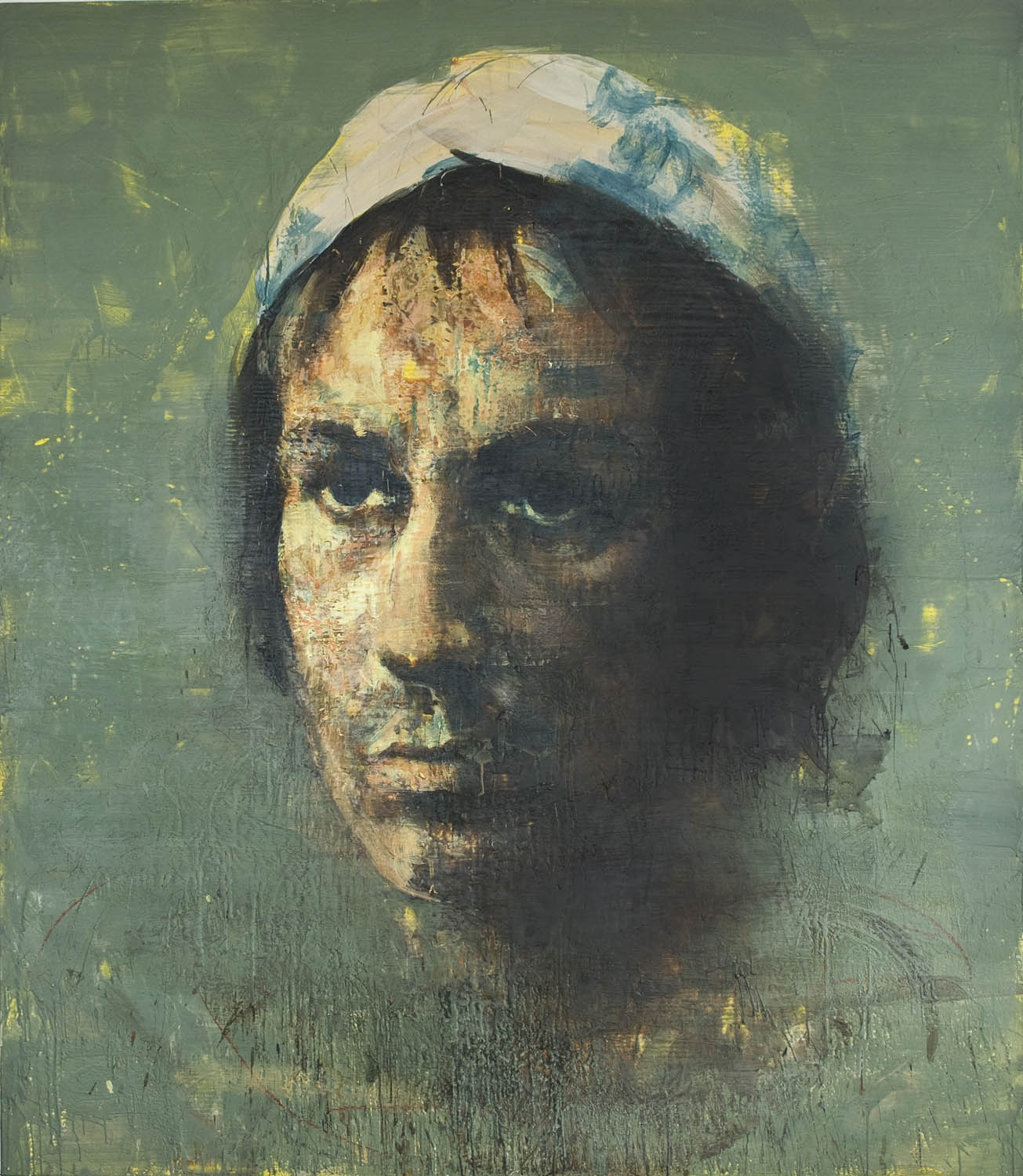 Machiavelli, 2010-11, encaustic, oil pastel on canvas, 84 x 72 in. Courtesy of Georgia Scherman Projects, Toronto
Tony Scherman has constantly insisted that he isn’t an ironist, yet some of his work, perhaps the entire Black October series may lead us to think differently. From the presence of the trilogy of flower paintings The Death of Pierre Laporte and Conversations with the Devil to the somewhat superficial subject matter, this exhibition may intensify our reason to believe differently.
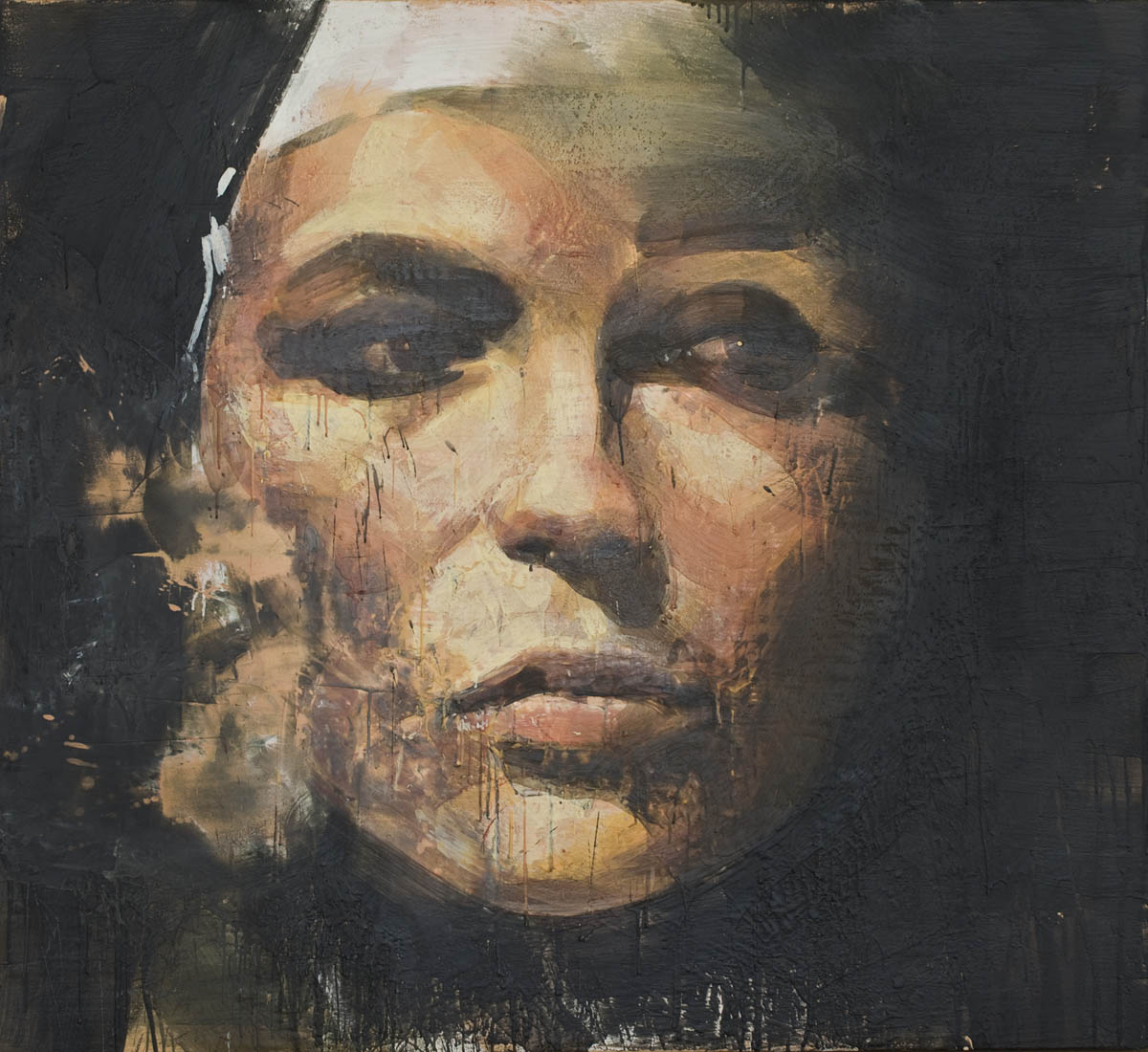 Nun, 2010-11, encaustic, oil pastel on canvas, 54 x 60 in. Courtesy of Georgia Scherman Projects, Toronto
We must remember that Tony Scherman deploys the use of subtlety; instead of painting the Quebec workers on strike he chooses to display more glamourized aspects of this moment of history, such as the face of Barbara Streisand, giving the presentation of the involved themes a quiet but powerful undercurrent. Furthermore, the physical appearance of the artwork, does play a particularly important role in the manifestations of themes imagined by the artist. For example: the scab-like texture of the encaustic paints makes for a very striking collection of artwork, whilst outlining the wounds within Canadian history, even if unintentionally.
Haafiz Karim
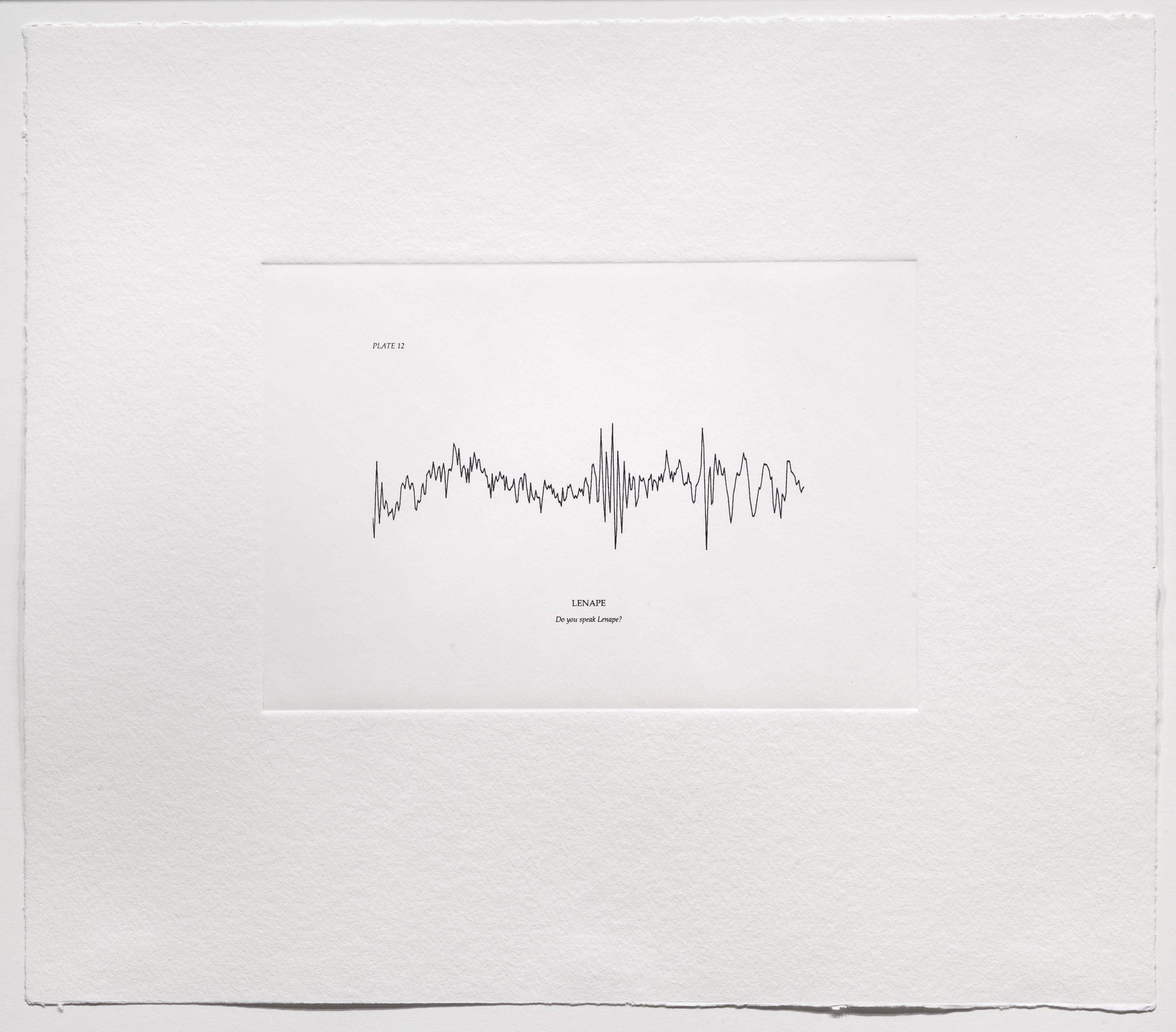 Susan Hiller, The Last Silent Movie, 2007. Lenape, 46.25 x 51.5 cm. Courtesy the British Council & Timothy Taylor Gallery (London) / Photo Credit: Toni Hafkenscheid