Category: FEATURES

  • Tony Scherman: “Black October”

    Georgia Scherman Projects Gallery
    October 20 – November 26, 2011

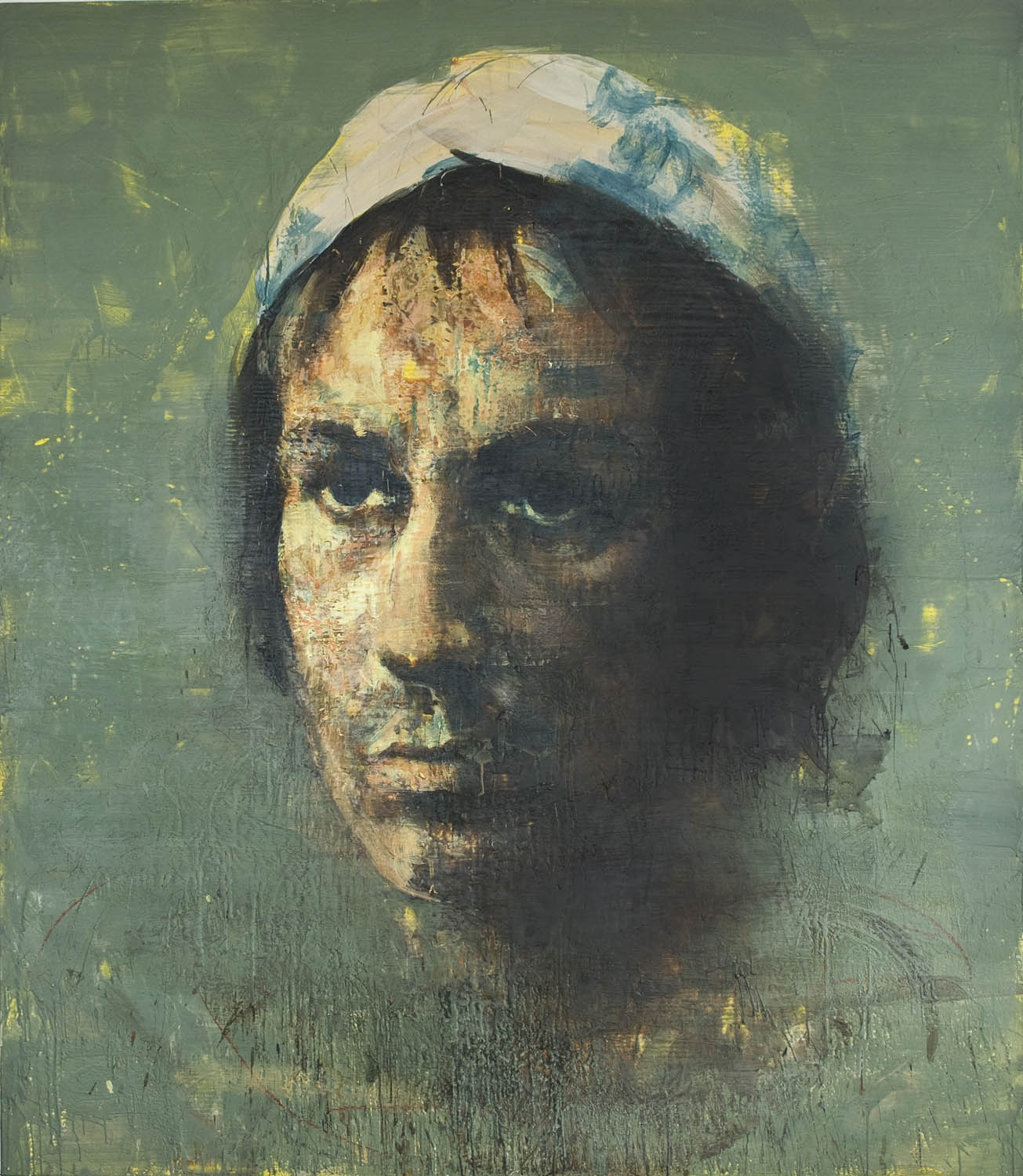
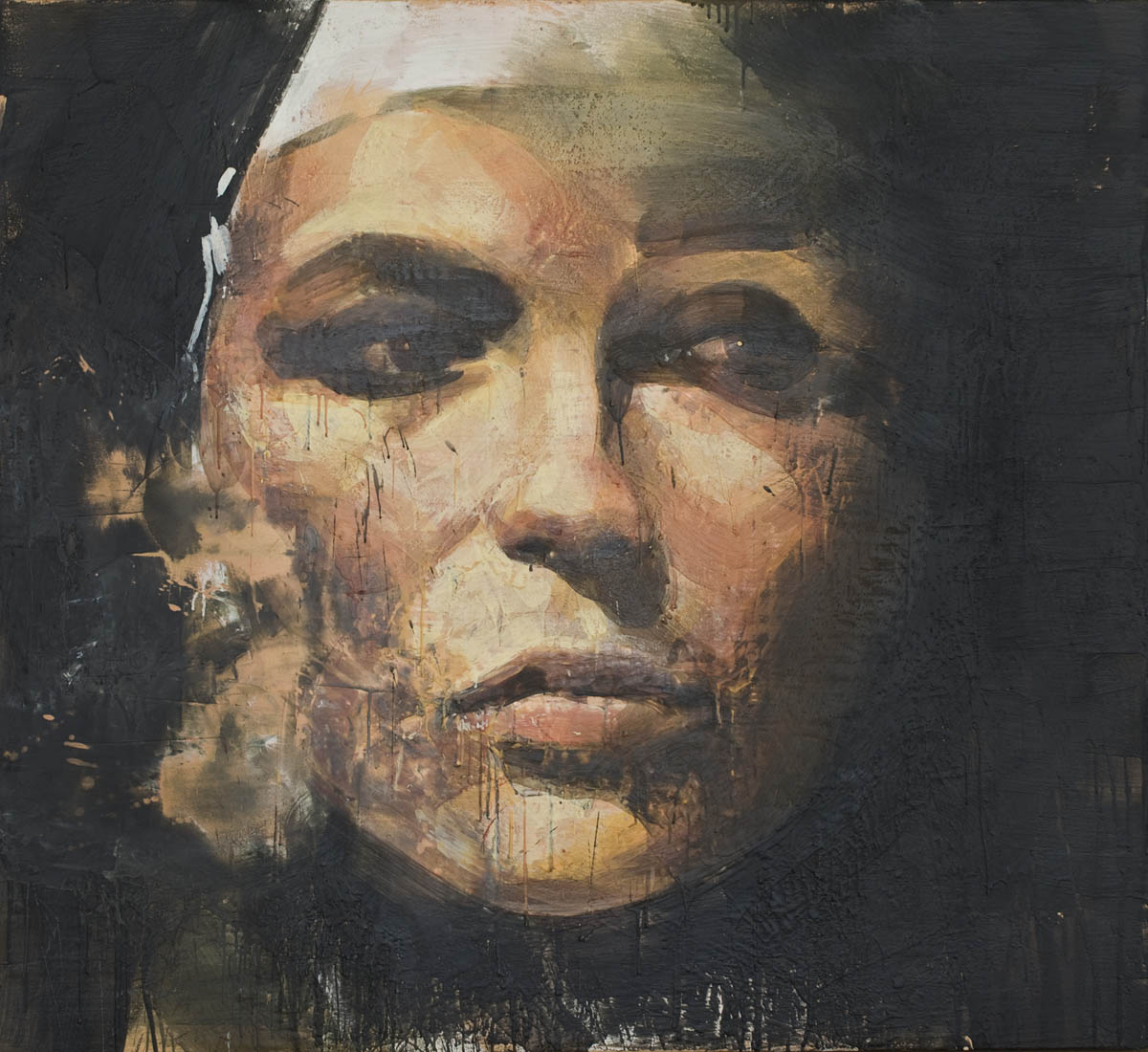
    Toronto based artist Tony Scherman is best known for his perfection of the encaustic technique; a painstaking and challenging process involving the dripping of  wax, one colour at a time, directly onto canvas.  Black October  features thirteen pieces, consisting of large-scale encaustic paintings some combining the technique with oil pastel. It is not the technical skills displayed in these paintings however, that captures the viewers interest but rather the exploration of a narrative based on the October Crisis.  Despite the weakness in metaphorical allusion, Scherman’s paintings still manage to capture his view on this important aspect of Canadian history, based substantially on Pierre Trudeau, his influences and to some extent personal life.

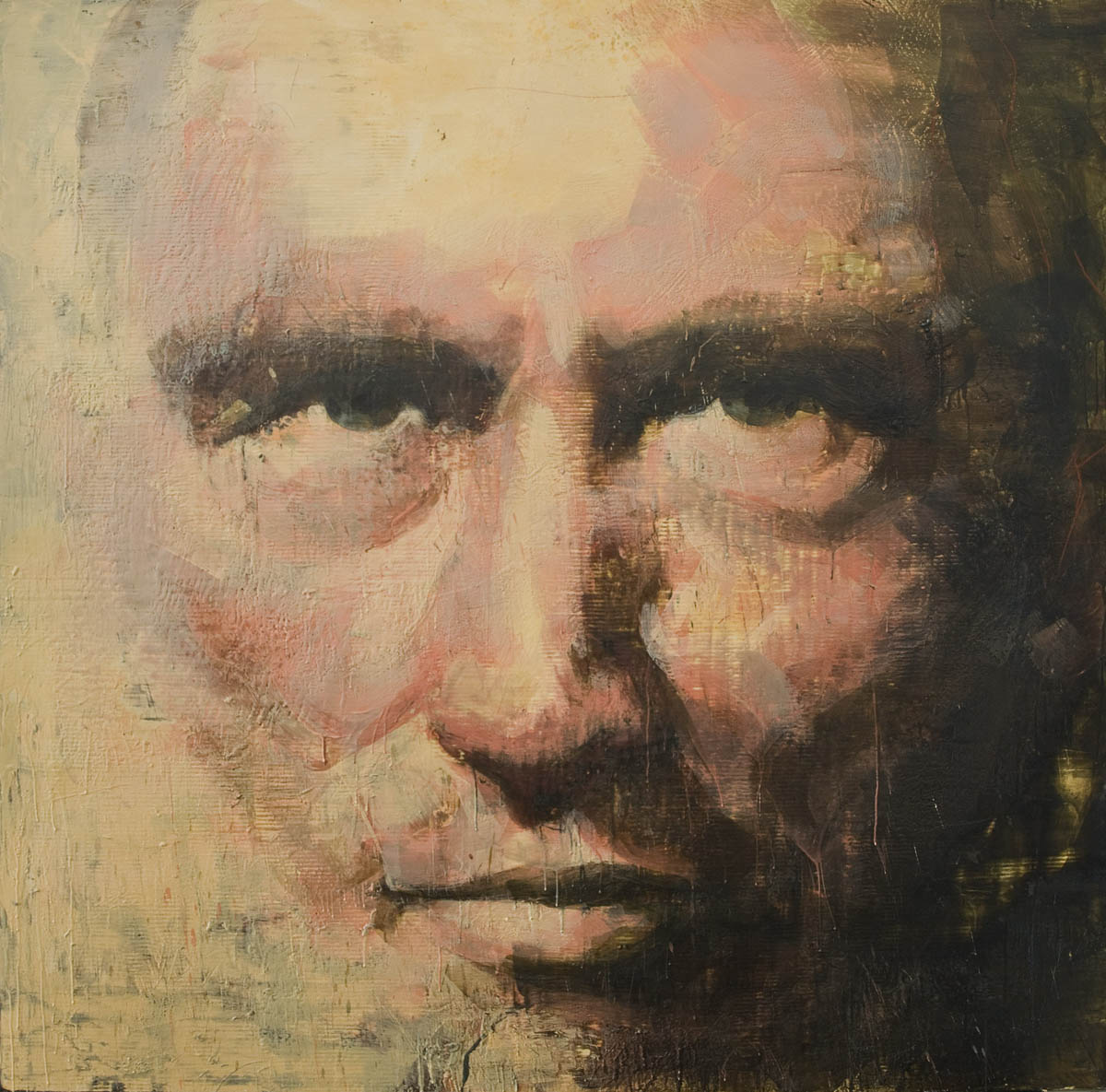
    Trudeau, 2010-11, encaustic, oil pastel on canvas, 84 x 84 in. Courtesy of Georgia Scherman Projects, Toronto

    Black October can be seen as a response, reflection and personal interpretation of the series of events that happened in the month of October 1970, an episode called the ‘October Crisis’.  In the press release by Georgia Scherman Projects, the essential understanding behind  Black October is stated: “Scherman imagines a broad historical and social context for Trudeau’s authorization of the War Measures Act.” What  makes this episode powerful and emotional in Scherman’s view?

    Fear, love, brutality, death and ego are the dominant themes of this exposition and transcend into the physicality of the artworks. It could be the large round eyes and sullen pout in Pierre Trudeau’s portrait that lead us to associate his persona with a distinct egotism.  Imaginably, it could be the quiet smugness brought out by the partial exposure of Barbara Streisand’s face that leads us into the realms of Trudeau’s love life, making it a source of influence in the eyes of Scherman.  The face of Machiavelli together with the presence of Karl Marx proceed to make this narrative dark or perhaps furtive giving us reasons to believe that the October Crisis was much more than just a public scandal: rather it was a result of several factors and historical influences.  One could say that Trudeau is represented as Canada’s Napoleon.

    Machiavelli, 2010-11, encaustic, oil pastel on canvas,  84 x 72 in. Courtesy of Georgia Scherman Projects, Toronto

     Tony Scherman has constantly insisted that he isn’t an ironist, yet some of his work, perhaps the entire Black October series may lead us to think differently. From the presence of the trilogy of flower paintings  The Death of Pierre Laporte and Conversations with the Devil to the somewhat superficial subject matter, this exhibition  may intensify our reason to believe differently.

    Nun, 2010-11, encaustic, oil pastel on canvas, 54 x 60 in. Courtesy of Georgia Scherman Projects, Toronto

     We must remember that Tony Scherman deploys the use of subtlety; instead of painting the Quebec workers on strike he chooses to display more glamourized aspects of this moment of history, such as the face of Barbara Streisand,  giving the presentation of the involved themes a quiet but powerful undercurrent. Furthermore, the physical appearance of the artwork, does play a particularly important role in the manifestations of themes imagined by the artist. For example: the scab-like texture of the encaustic paints makes for a very striking collection of artwork, whilst outlining the wounds within Canadian history, even if unintentionally.

    Haafiz Karim

  • Troy Brooks: Colossus

    Originally published in Xtra:

    Troy Brooks’  Colossus / Taking inspiration from Sylvia Plath / Toronto / Thursday,
    October 13, 2011. Xtra.ca  (http://xtra.ca/

    “I have always loved loud women,” says painter Troy Brooks, “women who are authoritative, dynamic, bold, not a product of their time.”
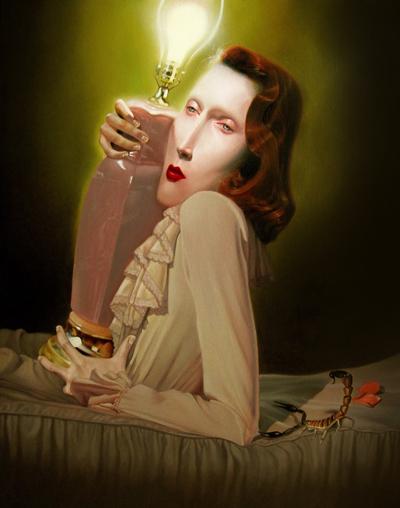
    Troy Brooks, Lady Lazarus
    So when Brooks happened to stumble onto an online documentary about the famously defiant author Sylvia Plath, he knew he had found the muse for his next project. After spending his summer holed up in a Hickory Grove cabin in southern Ontario, he emerged with his series Colossus, which will open at Toronto’s Pentimento Gallery on Oct 27 and run until Nov 27.
    “I think a lot of gay men feel the way I do about loud women,” he continues. “When you spend part of your life repressing a big part of you, or your feminine side, you take pleasure in watching a woman act out.”
    And Plath is, in many ways, this kind of rogue. Her oeuvre, especially her well-known novel The Bell Jar, painfully unwraps the rigid social norms for women of her era and the severe damage that results from them. Having taken her own life at 30, Plath’s legacy is a dark one, marked by anger, depression and a struggle against chauvinism. She has been taken up posthumously as something of an icon for feminists and smart women everywhere.
    Troy Brooks, All The Dead Dears
    “[Plath’s] was a time when women were encouraged to be demure and uncomplicated, and she was the antithesis of that. She was dark, she was brooding, she was ambitious,” Brooks explains. “With this particular series, I was interested in the idea of a woman who is much bigger than her surroundings, much bigger than the definitions imposed on her.”
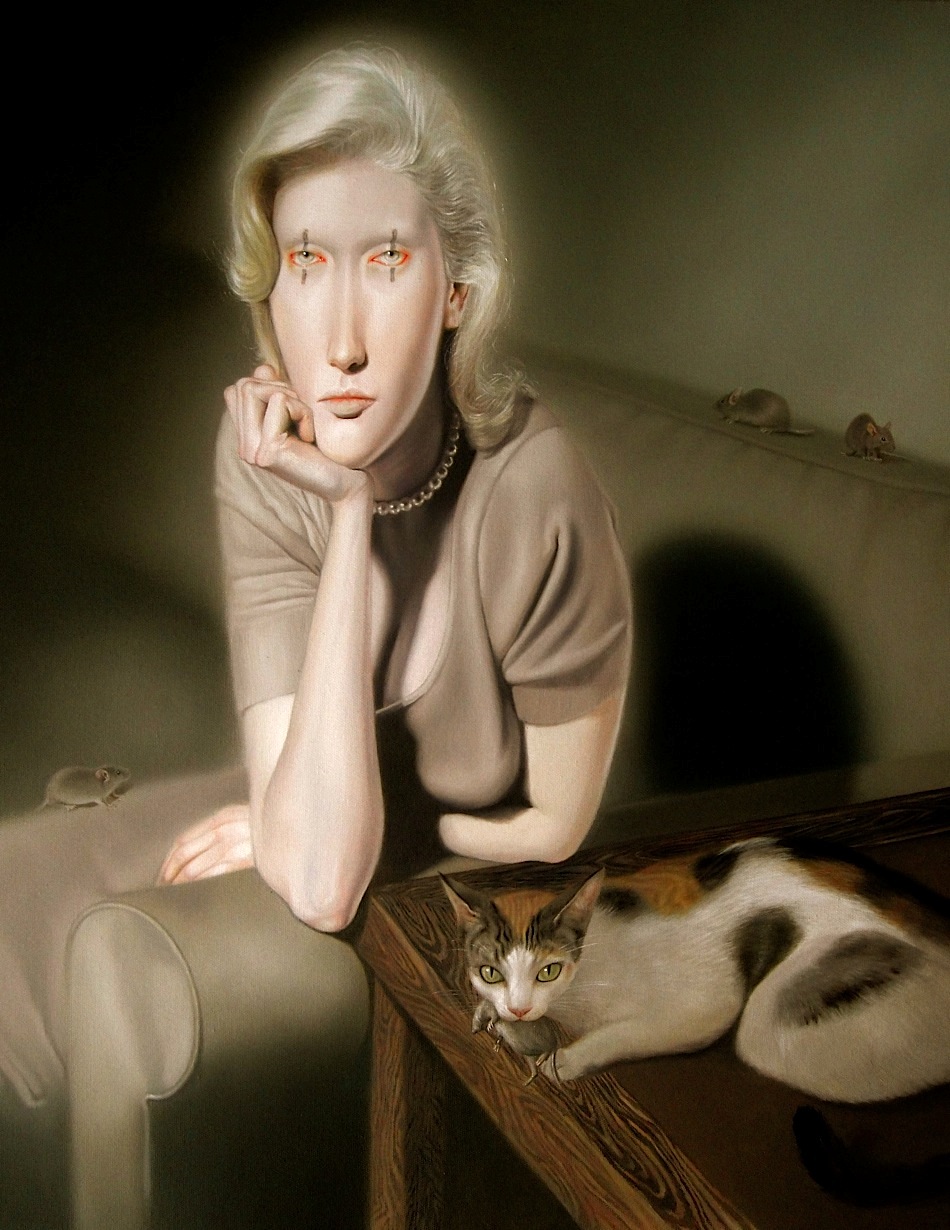
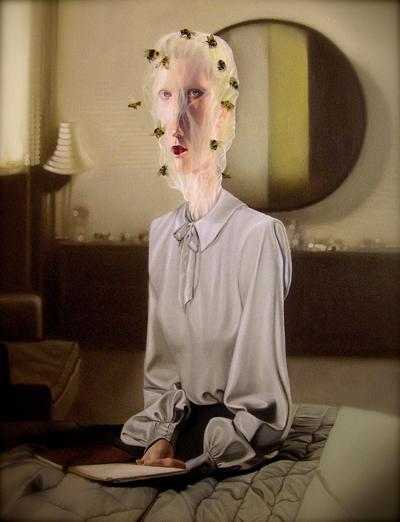
    Like Plath, the women depicted in the series do seem to have a sort of eerie magnetism. Long and pale faces with crimson lips look outward from simple, but often bizarre, surroundings. In Lady Lazarus, a vampy redhead stares emptily into space as she tightly grips a ceramic lamp to her cheek, oblivious, or perhaps indifferent, to the scorpion just behind her elbow. In Arrival of the Bee Box, a calm blonde looms upright in a generic bedroom and glares knowingly at the viewer through a veil covered in bees.
    Troy Brooks, Arrival of the Bee Box
    Although such spectral characters are primarily inspired by Plath’s work (each painting’s title is taken from different Plath poems), Brooks does not intend them to be definitive portraits of Plath or her work. “I had my peripheral knowledge about Sylvia Plath, but I didn’t want them to be manifestations of her and the poems,” he emphasizes. “I had my own impression of her and I built from that.”
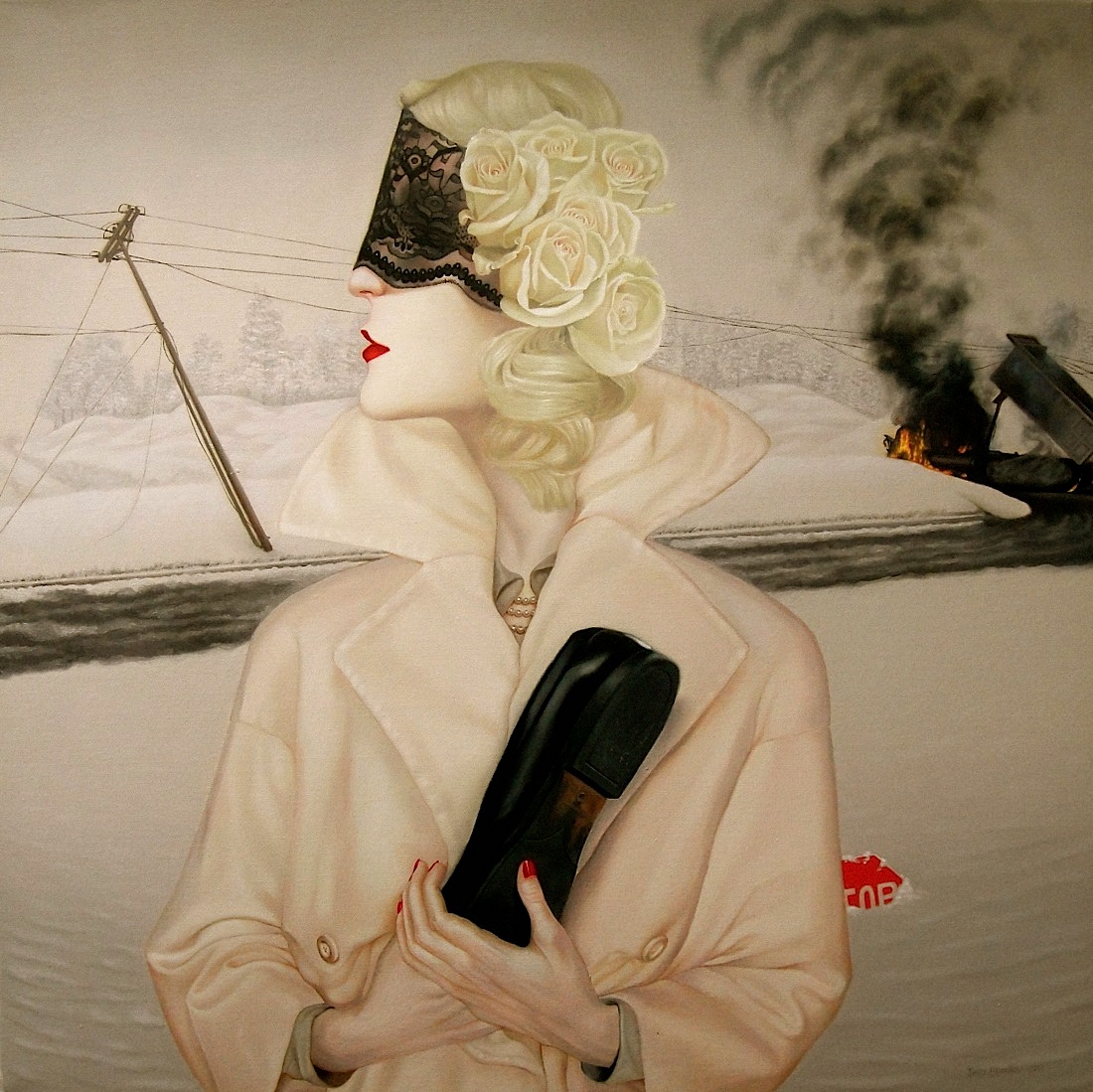
    The paintings, thus, serve as a sort of translation of, even departure from, the texts they reference — projecting them onto a surreal yet strangely familiar time and space. Some of them contain imagery directly related to a single poem: Plath enthusiasts will immediately recognize the black shoe and telephone poles in Daddy. But others create whole new sets of symbols and stories. All of them invite interpretation from the audience regardless of their familiarity with Plath’s work.
    Troy Brooks, Daddy
    “I’m really only painting her archetypes,” Brooks explains. “I used pieces of her to make my own characters.”
    Jonathan Valelley
  • Nuit Blanche 2011

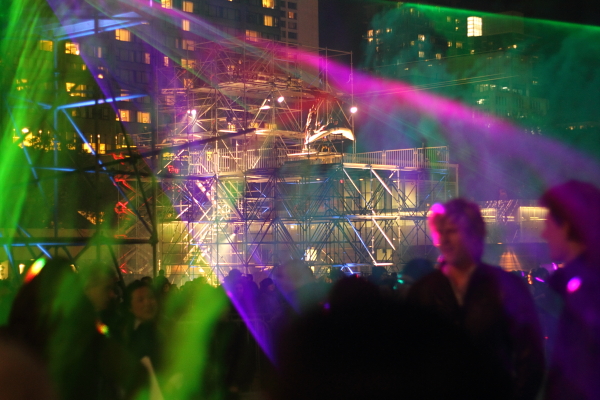
    Usman Haque and Natalie Jeremijenko, Flightpath Toronto, 2011. Photo by Mauricio Contreras-Paredes

    October 2011’s Nuit Blanche was chilly indeed, but Murray Whyte’s aptly titled article seems to express a misdirected sense of frustration. Criticizing the fact that Nuit Blanche seems to dissolve into late-night, often dangerous revelling rather than focused engagement with contemporary art works, Whyte, suggests that this ungainliness is foreshadowing the end of Toronto’s all night happening. Ominous as his tone is, Whyte draws attention to important factors such as the declining financial assistance from the city of Toronto leading to a reliance on corporate sponsors, and the disinterested approach taken up by the many individuals whose attendance results from an attraction to the seemingly illicit roaming of the streets. But, while the unruly crowd lends a feeling of the carnivalesque, this level of attendance at an arts-based event is inimitable. Contending with boisterous crowds, especially when comprised of individuals taking advantage of a provided space in which to stay up late and party, is an inherent aspect of popular events. Attending a beloved band’s concert or an NFL football game involves a comparable atmosphere. While this can often compete with one’s enjoyment or appreciation of the event, bidding the whole production adieu doesn’t need to be the response. Nuit Blanche, while sharing the characteristics of other entertainment-based events, is particular in that it is intended to be a showcase of contemporary art; a conceptualized occurrence in which one can experience our urban space in an altered state. Rather than dismissively bid farewell, it seems as though the most productive outlook would be to find a way in which to positively channel the established energy and interest that Nuit Blanche has garnered so far.

    Questions which need answering are abundant. How does a spectacular art event such as Nuit Blanche maintain itself as a dynamic exhibition of contemporary art works? How can the event manage a huge influx of people in the downtown core, throughout the wee hours of the night in a safe and conducive way? Comparing Nuit Blanche to other contemporary events proves that this collective and interactive manner of exhibiting and experiencing contemporary art has become firmly established. Contemporary works, many of which are intrinsically connected to the notion of participatory interaction therefore necessitate the involvement of lots of people. Yet how does an artwork, and an artist negotiate the precarious balances that are involved- are works created for such circumstances? Are they designed for the purpose of drawing a crowd, as, Natalie Jeremijenko and Usman Haque’s amusement park-esque attraction “Flight Path” seemed to do  with its laser light show and promises of flying with wings (and a zip-line) through the air above Nathan Phillips square. Negotiating the benefits and disadvantages involved in the spectacularization of an impermanent art exhibition is ultimately going to be a constantly fluctuating challenge.

    My own Nuit Blanche experience involved staying up the entire night and while it was much more positive than the night Whyte writes about, I was still left with the feeling that the timeframe provided an unrealistic space in which to experience art. For those who are less inclined to lose a full night’s sleep, the stress of negotiating the throngs of people that swarm the downtown core between 6pm and 3am, can diminish the effect of the art. Perhaps more guidance could be provided in the form of maps that not only describe the art works themselves, but define the atmosphere of different areas of the city, in order to direct those attempting to enjoy a night of art, or those who prefer a night of partying. Again this idea of presenting concept-based maps draws attention to the dilemmas provoked by this event: how do we deal with such a highly attended spectacular event, experience contemporary art in a tight time-frame, negotiate the theories and concepts in question, maintain criticality, and avoid the feeling that the experience is being fabricated and then simply consumed.

    Miriam Arbus

    Note: Murray Whyte published an article about Nuit Blanche 2011 and its future in The Toronto Star on Monday, October 3, 2011.

  • Viva Voce! 40th Anniversary of the Art & Art History Program

    September 14- October 23, 2011
    Blackwood Gallery
    University of Toronto Mississauga

    The University of Toronto at Mississauga is proudly home to the spectacular Art & Art History Program alongside Sheridan Collage. This program administers a unique and stimulating approach to the study of art and design, emphasizing studio practice as well as theoretical and art historical knowledge. Founded in 1971 with only four students under it’s banner, this year marks the 4oth anniversary of this diverse, accomplished, and successful program!


    To commemorate the occasion, curator Shannon Anderson devised a collaborative curatorial approach for the exhibition, selecting artwork, designs, and films created by a diverse group of graduates. The Viva Voce exhibition, taking place at the Blackwood Gallery, features contemporary art in all media, generated by a selection of Art & Art History program alumni! Viva Voce features works devised by Dorian FitzGerald, Alison S.M. Kobayashi, Richie Mehta & Stuart A. McIntyre, Johnson Ngo, Denyse Thomasos, Carolyn Tripp, Jessica Vallentin, Rhonda Weppler & Trevor Mahovsky, Andrew Wright, and Robert Zingone. Alumni participants were selected on the basis of recommendations from past and present faculty members. In keeping with the 40th year anniversary, exactly 40 faculty members were contacted for recommendations.

    Rhonda Weppler & Trevor Mahovsky’s Stacks

     The curatorial and exhibition method for Viva Voce is unique one, focusing on the relationship between a professor and his or her student. After all, faculty members were the ones responsible for recommending a select few program alumni. In keeping with the occasion, the exhibition exists as the product of a collective group effort made by the curator, program alumni, and professors, who all participated in this process. Not only does this exhibition exemplify the importance and complexities of a student and teacher relationship, it also illuminates the transformation of a student into a co-worker!

    Viva Voce is a Latin term for “with the living voice,” a powerful and appropriate title. Within each piece of artwork exists a message or conceptual idea that has become “voiced” by its existence. This title also illustrates the many voices that have contributed to the development of this exhibition, including students, alumni, as well as the voices of faculty members.


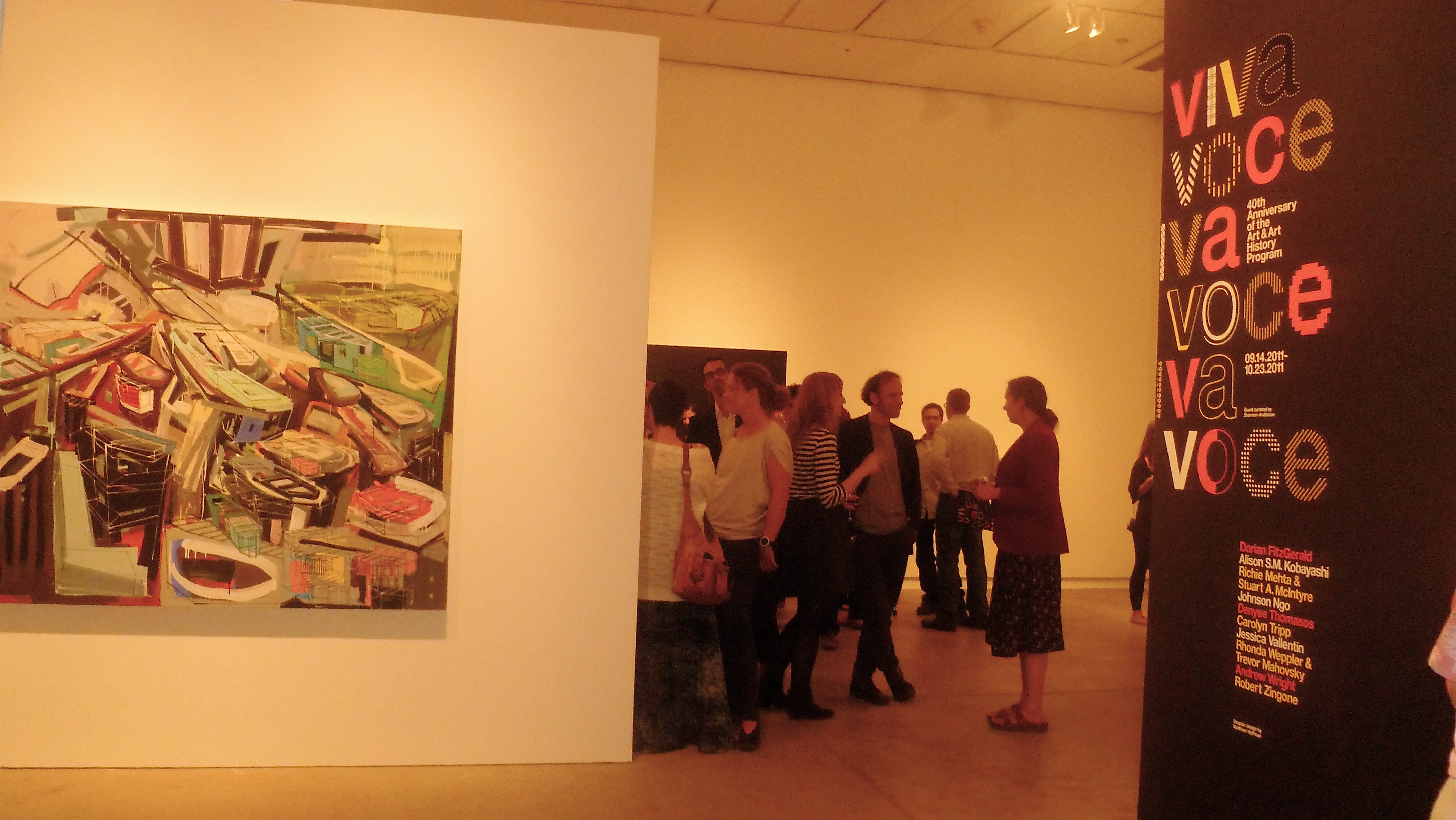
     Denyse Thomasos, Stealth

    Walking into the Blackwood Gallery doors, herds of people were gathered around crisp white walls whispering, laughing and chatting. Hung on the entrance wall of the Blackwood Gallery, first to be seen is Denyse Thomasos piece titled “Stealth.” Encompassing an assortment of architectural forms, this is also piece borderline abstraction using bright colours such as blue, green, purple and red. One must walk around this wall in order to reach the other works of art in the gallery. The contrast of the stark white walls against the coloured paintings, sculptures, and films allows the artwork itself to illuminate the gallery. Each work is drastically different, drawing in the viewer’s attention time and time again! Who would want to spend time in the Blackwood Gallery viewing works of art that are all too similar anyways? Isn’t it fitting that the exhibition incorporates a variety of mixed media artworks, in order to represent each unique artistic practice?

    Carolyn Tripp, House Fire

    Although physically each work of art is constructed extremely differently, and so they should be, conceptually they all represent the unique voice of each artist. Collectively the works of art represent relationships with teachers and their transition from student to graduate. Viva Voce gives students a fantastic opportunity to examine former students’ work while also giving the alumni an opportunity to further showcase their work. It is a great exchange! Students must be sure to check out this unique exhibition and join the University of Toronto at Mississauga in saluting this exciting 40th year milestone!


    by Amanda Pignotti

  • Abstract Expressionist New York

    by Emese Krunák-Hajagos

    Abstract Expressionist New York
    Art Gallery of Ontario, Toronto, May 28 – September 4, 2011

         Abstract Expressionist New York considered a “killer” exhibition in Toronto showing the most important American art works of the 20th century. The exhibition is an open book of modern art history. It was exhibited first in New York titled The Big Picture (Museum of Modern Art, New York, October 3, 2010 – April 25, 2011) and is really a great bonus for Toronto to host a show at this scale and artistic importance in the summer.

        Abstract Expressionism was the first specifically American movement to achieve worldwide recognition. In the late 1930s and through World War II many leading painters fled the terrors of Nazism in Europe and sought refuge in the United States. Among them were Hans Hoffman, who became a pioneer and teacher of abstraction and Archile Gorky, the “godfather” of the movement. While the war was raging in Europe, New York City was a safe haven. Exiled artists and dealers filled the city. Peggy Guggenheim opened her gallery The Art of This Century, Leo Castelli became an art dealer and local artists all benefitted. At the end of the war, Europe was in ruins and New York replaced Paris as the centre of the art world. The United States came out of the war victorious and its economy was stronger than ever. Some kind of hero worship was in the air and the Americans were ready to develop their national identity even further and show their importance to the world. A new generation of American artists began to emerge and soon they would be ready to dominate the world stage. They were called the New York School or the Abstract Expressionists, a new term the art critic Robert Coates used to describe Hofmann’s works in 1946. All the artists felt an urgency to depict, look at, think about and make art of their time. As Jackson Pollock said, “It seems to me that the modern painter cannot express this age, the airplane, the atom bomb, the radio, in the old forms of the Renaissance or of any other past culture. Each age finds its own techniques.”
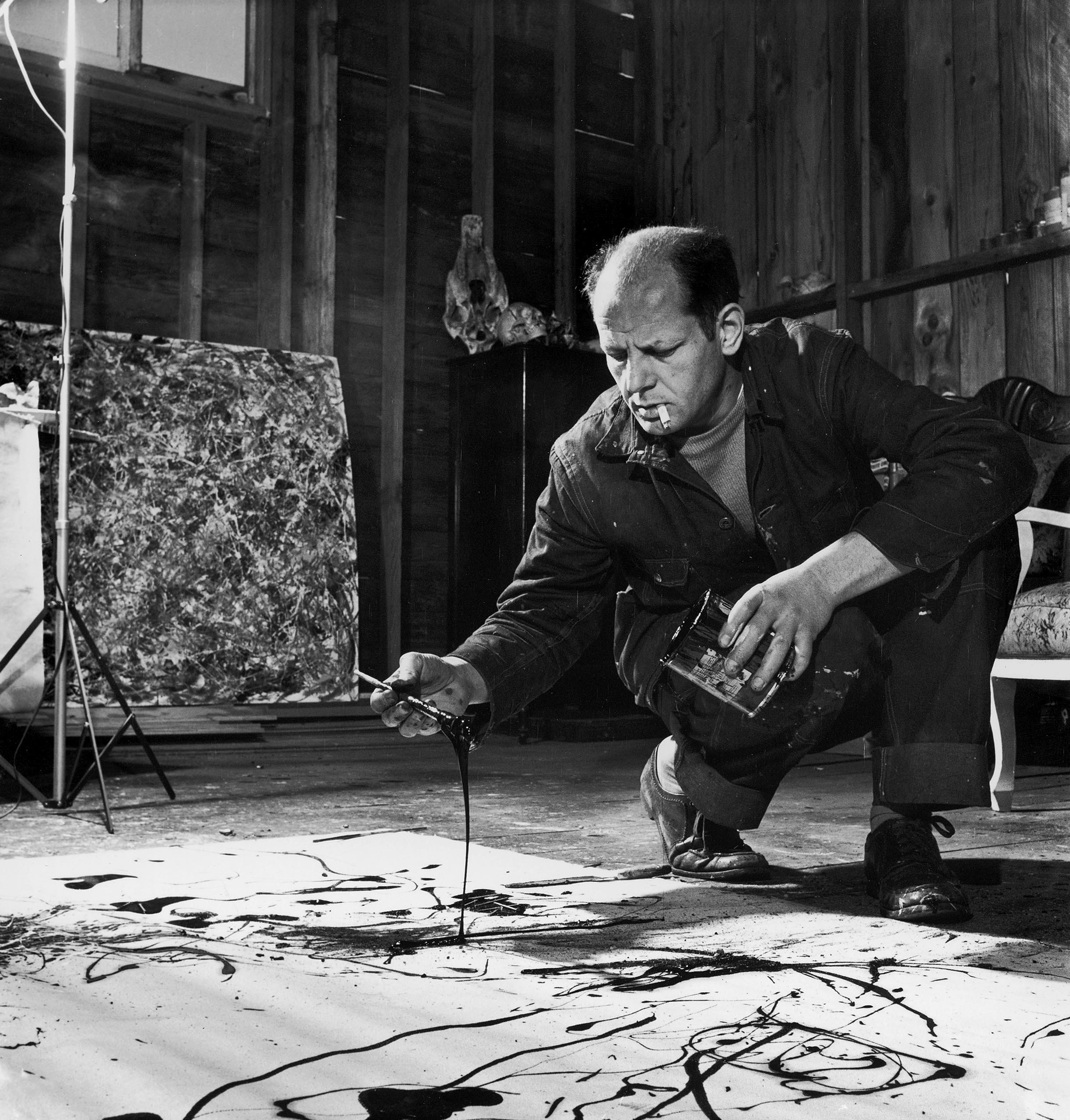
    Artist Jackson Pollock working in his studio. Photo by Martha Holmes/Time Life Pictures/Getty images

         “We agree only to disagree”could be the unwritten motto of this loose grouping of artists according to the art historian Irving Sandler. As the Abstract Expressionists never formed a unified group, their diversity was always visible. In the 1940s, the two leading critics of Abstract Expressionism, Clement Greenberg and Harold Rosenberg had different theories about the meaning, function and style of modern art that created an ongoing debate. Greenberg defined painting by its flatness, so it had to be purified of all illusionistic and sculptural effects such as deepness and plasticity. Subject matter also had to be eliminated. He urged the artists to develop “a bland, large, balanced, Apollonian art” aiming for “an intense detachment” from everything present—a rather minimalist approach. Greenberg advocated for Jackson Pollock and the Color field painters like Mark Rothko, Barnett Newman, Adolf Gottlieb, Clyfford Still and Hans Hofmann. However artists had little sympathy for his formalist perspective, as Rothko wrote in a letter to the New York Times in 1943: “It is widely accepted notion among painters that it does not matter what one paints so long as it is well painted… There is not such a thing as good painting about nothing.” Harold Rosenberg was more interested in the political and social movements of the period and their influence on the artists. He spoke of the transformation of painting into an existential drama: “At a certain moment the canvas began to appear to one American painter after another as an arena in which to act. What was to go on the canvas was not a picture but an event.” Action painting is a term created to describe the works of Jackson Pollock, Willem de Kooning and Franz Kline. Then came the big moment when it was painting for just the sake of PAINT and the gesture on the canvas was liberation from political, aesthetic and moral values.

           Abstract Expressionism and MoMA came into being about the same time. In the 1940s director Alfred H. Barr, Jr. started to collect works from his artist friends; being there at the moment when their first exhibition opened; artist and curator building institutional and art history at the same time. As MoMA’s director Glenn Lowry said what made that time unique  “was a capacity of artists to engage with a cosmic quest, a spiritual quest to find meaning.” “A total commitment on the artists’ side” continued Ann Temkin – “painting was the only thing that mattered there was no separation between the self and the art work, that’s why the paintings feel like living things.”  The exhibited works in this show all came from MoMA’s collection curated by Ann Temkin. Her goal was finding the layers underneath the surface and show the artists’ works before they became “big”, documenting the whole artistic development not just the trophy pieces. The New York and Toronto exhibitions are differently installed and that somehow changes the outcome. There are less works in numbers in Toronto still the show is as strong, even more focused, since the most important, strongest pieces are here.
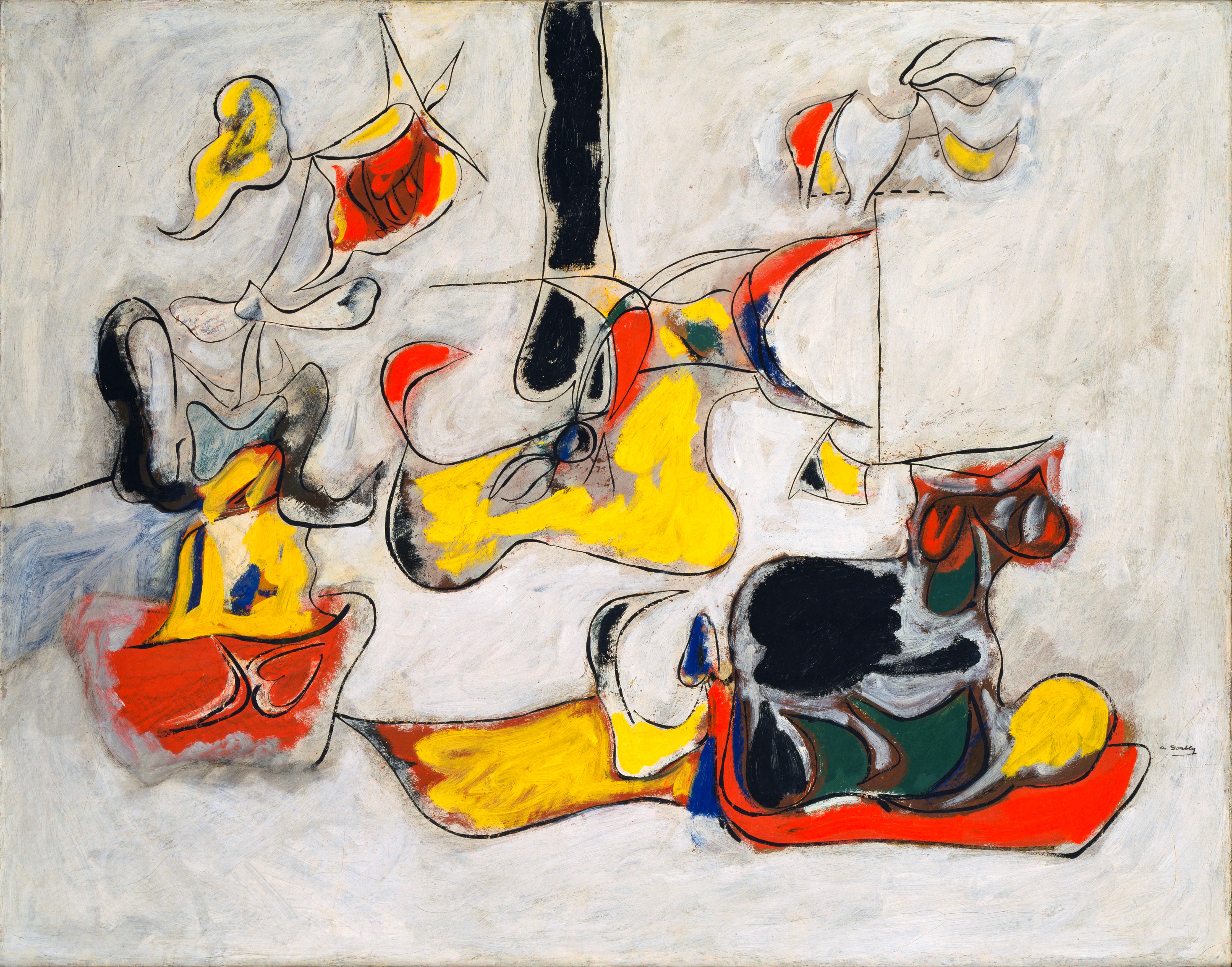
    Arshile Gorky (American, bornArshile Gorky (American, born Arshile Gorky (American, born Armenia. 1904-1948), Garden in Sochi; c. 194;3 Oil on canvas; 31 x 39″ (78.7 x 99 cm)The Museum of Modern Art. Acquired through the Lillie P. Bliss Bequest 492.1969 © 2010 The Arshile Gorky Foundation / Artists Rights Society (ARS), New York Photo Credit: The Museum of Modern Art, Department of Imaging Services, Paige Knigh

         As we walk into a narrow corridor at the beginning of the show we see the early mythological works of William Baziotes (Dwarf, 1947) and Adolf Gottlieb.  Achile Gorky’s late works like Garden in Sochi (1938-40) refers to the artist’s past and the memories of it. His images are more delicate and more outlined then earlier in his carrier with a vibrant palette. His figures go through a methamorphosis and are becoming floral like creatures and even a composition like Agony (1947) seems almost happy.

    Willem de Kooning (American, born the Netherlands.1904-1997) Woman, I.; 1950-52; Oil on canvas; 6′ 3 7/8″ x x58″ (192.7×147.3 cm). The Museum of Modern Art. Purchase 478.19532010 The Willem de Kooning Foundation / Artists Rights Society (ARS), New York Photo Credit: The Museum of Modern Art, Department of Imaging Services, John Wronn

        Willem de Kooning is represented by only three paintings hanging in the same small room; they were placed in three separate galleries in New York. It is even more visible here how he never applied himself to any style keeping his artistic freedom, switching between abstraction and figurativity. The famous Woman I, (1950), a strong figurative piece, is much disputed. Does it picture the scary, overwhelming aspect of female power over men or does it mirror male aggression toward women? The large figure of the woman with enormous breasts, big eyes and howling mouth is depicted by angry brush strokes while her clothes and the background are created by abstract patches of paint.
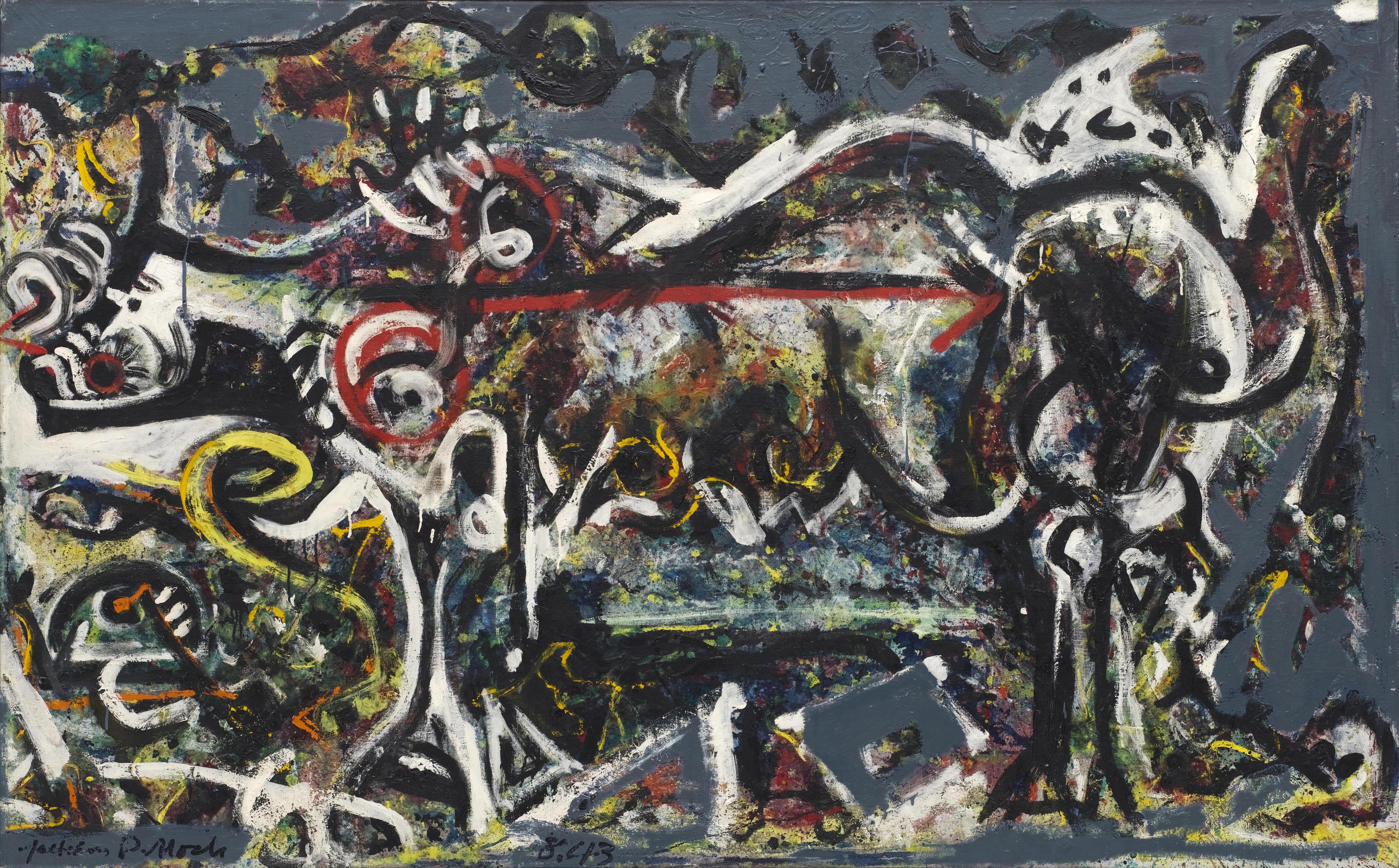
    Jackson Pollock (American, 1912-1956), The She-Wolf, 1943; Oil, gouache, and plaster on canvas41 7/8 x 67″ (106.4 x 170.2 cm) .The Museum of Modern Art. Purchaces2011 The Pollock-Krasner Foundation/Artists Right Society (ARS), New York:Photo credit: The Museum of Modern Art, Department of Imaging Services

     A large gallery is dedicated to Jackson Pollock’s paintings. His early canvases (Mask, 1941) remind us of Picasso and his first really original piece is The She-Wolf (1943) with its free-form abstraction. In 1947, Pollock described his painting process in detail: “I prefer to tack the unstretched canvas to the hard wall or the floor. I need a resistance of a hard surface. On the floor I am more at ease. I feel nearer, more a part of the painting, since this way I can walk around it, work from the sides and literally be in the painting.” Pollock used objects such as sticks, spatulas, knives, or vessels with which the paint could be dripped, poured or hurled on the canvas. He emphasized the automatism of his approach as a “pure harmony, an easy give and take” but also mentioned that after a “get acquainted period” with the painting he makes changes, and has no fear of destroying part of the composition since the painting has its own life and comes out well at the end. Full Fathom Five (1947) is a good example of this method. The weave of the top colour-layers veils a figure painted with lead paint. The objects worked into the picture such as buttons, keys, nails, cigarettes etc. are placed with reference to this hidden figure, you can see them at a close observation.
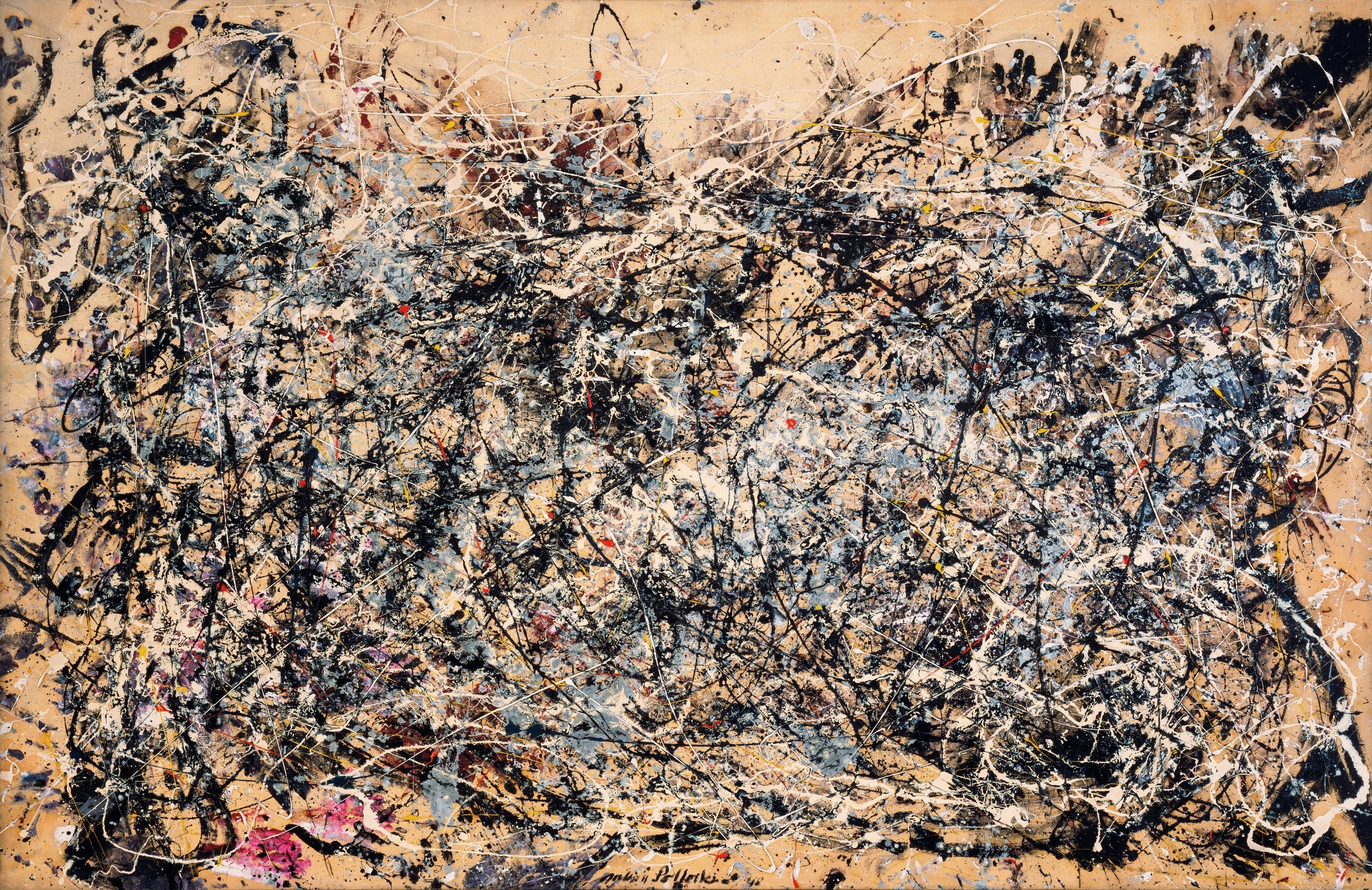
    Jackson Pollock (American, 1912-1956), Number 1A, 1948; 1948; Oil and enamel paint on canvas; 68″ x 8′ 8″ (172.7 x 264.2 cm). The Museum of Modern Art. Purchase ©2010 The Pollock- Krasner Foundation / Artists Rights Society (ARS), New YorkPhoto Credit: The Museum of Modern Art, Department of Imaging Services

        Pollock painted with his whole body, moving fast in a dance-like trance around the canvas, dripping or throwing paint sometimes straight from the can, then quickly touching it up, radiating a strong physical energy. His new painting method was a revelation to the New York art scene and in August, 1949 Life Magazine named him the greatest living painter in the United States. It was a hard responsibility to shoulder. In July 1950 Hans Namuth photographed and filmed him at work and his pictures created the mythic, sexually-charged image of “Jack the Dripper.” Pollock became a hero of mass media and someone called his drip-painting an  “apocalyptic wallpaper.” Pollock didn’t mean to create decor, still his “all over” method—covering the entire surface of the canvas and giving each part an equal importance (White Light, 1954)—became very influential for ornamental and decorative styles. The art critic Robert Hughes wrote that as his work was so influential, his image as a man was too. The image of a world famous painter, the Vincent van Gogh from Wyoming, dying at forty-four, drunk, with two girls in a big, expensive car, was elevated to symbolism as it is depicted in the actor and director Ed Harris’ movie: Pollock (2000).

         Mark Rothko is represented in a large gallery. Slow Swirl at Edge of Sea (1945), a surrealistic composition with two humanlike forms embraced in a swirling, floating, dancing happiness, depicted by soft grays and browns. In 1950 he started to paint his “multiforms,” his signature paintings. Rothko usually divided the canvas into three horizontal planes of bright, vibrant colours. He applied a thin layer of binder mixed with pigment onto the bare canvas, and then painted thinned oils onto this layer, then another layer, creating a dense mixture of overlapping colours and shapes which bleed into each other. His brushstrokes were light and very fast. A dramatic effect is created by the contrast of colours, radiating with inner energy (No.5/No.22, 1950).
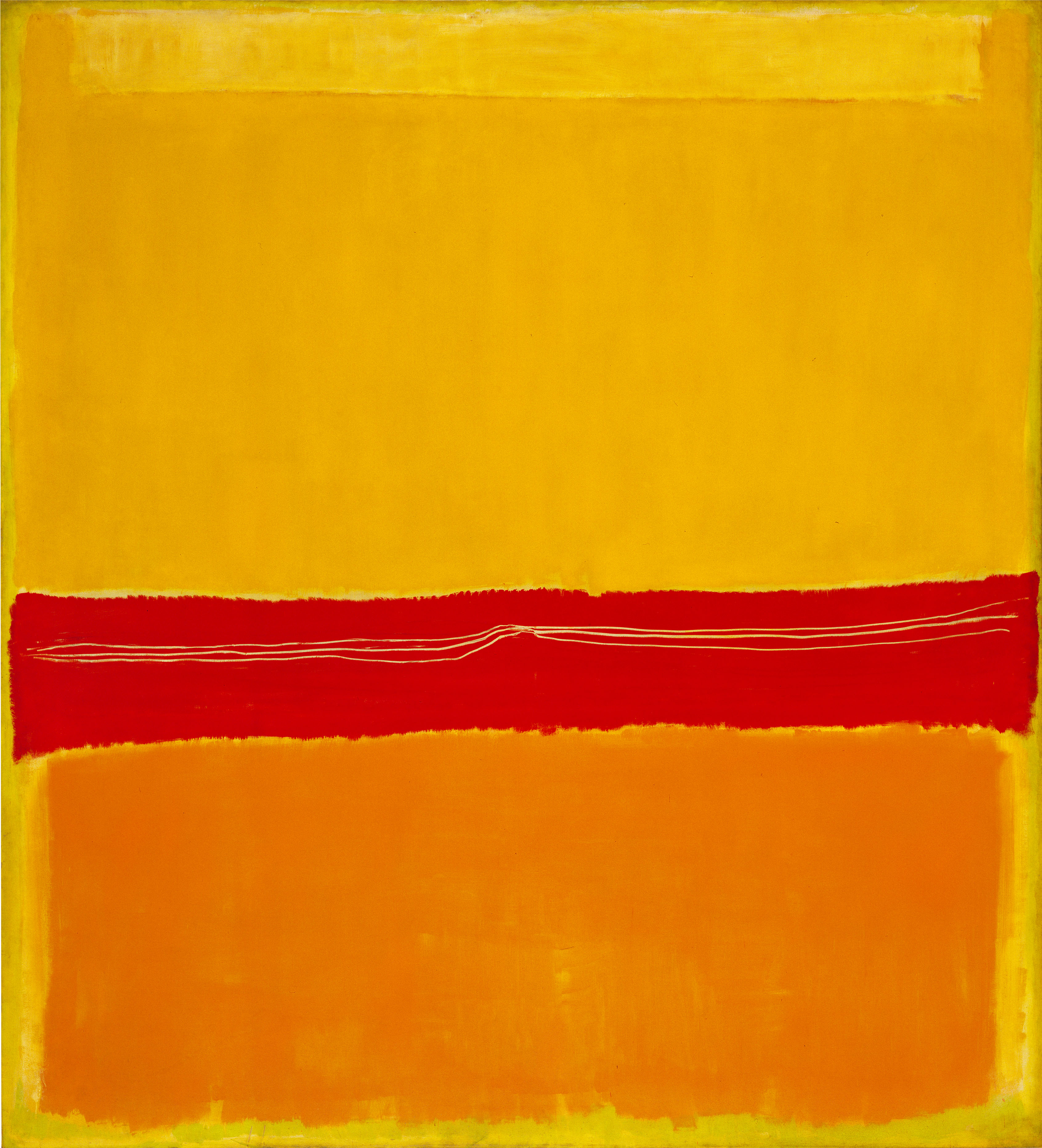
    Mark Rothko (American, born Latvia. 1903-1970), No. 5/No. 22; 1950 (dated on reverse 1949); Oil on canvas; 9′ 9″ x 8′ 11 1/8″ (297 x 272 cm). The Museum of Modern Art. Gift of the artist.© 1998 Kate Rothko Prizel & Christopher Rothko / ArtistsRights Society (ARS), New York.Photo credit: The Museum of Modern Art, Department of Imaging Services

         As Rothko wrote, his paintings are “only expressing basic human emotions – tragedy, ecstasy, doom and so on… The people who weep before my pictures are having the same religious experience I had when I painted them.” There is really something religious in Rothko’s attempt to abandon everything to feelings and create an unworldly atmosphere in his paintings No.37 Slate Blue and Brown on Plum (1958) gives a feeling of deepness and almost invites you to step into the blue shape and disappear into another world. Rothko became famous, successful and rich, and ironically that deepened his depression. The luxurious New York Four Seasons Restaurants commission (1958), well depicted in the Broadway show Red, was a great painterly challenge and his personal undoing at the same time. He never delivered the 40 pieces he painted for them. In the 1960s his horizon darkened dramatically. He finished the 14 large, dark, blood-coloured canvases for the Rothko Chapel but committed suicide before they were installed in 1971.

          A gallery shows a few works of Barnett Newman starting with Onement, I (1952), his breakthrough painting. The surface of a monochromatic background is vertically divided in half by an orange band, a “zip,” as the artist later called it. Newman explained his zip motive in his essay The First Man Was an Artist, as the stick the aboriginal man used to draw a line in the mud.  Newman suggested that his zip should be taken as a metaphor for this primal and tragic gesture of art. There is a photograph by Robert Frank showing a New York street with a white line in the middle (Street Line, New York, 1951); an interesting example of how a similar motive surfaces with different meanings in different artists’ works.
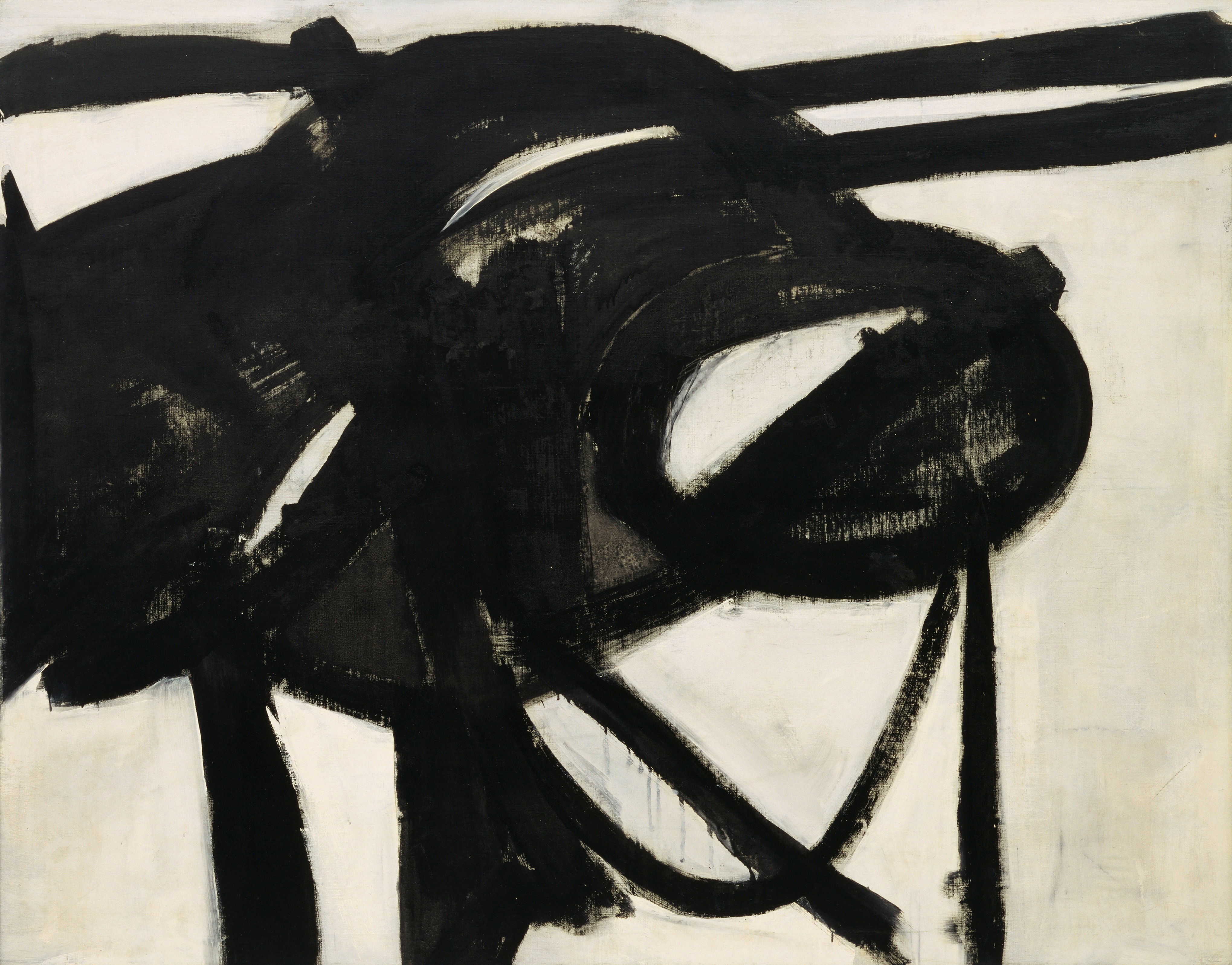
    Franz Kline (American, 1910-1962), Chief,1950; Oil on canvas; 58 3/8″ x 6′ 1 1/2″ (148.3 x 186.7 cm). The Museum of Modern Art. Gift of Mr. and Mrs. David M. Solinger. © 2010 The Franz Kline Estate / Artists Rights Society (ARS), New York. Photo credit: The Museum of Modern Art, Department of Imaging Services, John Wronn

         There are excellent pieces from Clyfford Still, Franz Kline and Robert Motherwell representing a more simplified, but not simple, gestural painting style which influenced the future artist generation greatly. Refreshing with its humour Isamu Noguchi’s Even the Centipede, (1957) stoneware sculpture with its long body and many legs created of plates, kettles and various pots. Abstract Expressionism  involved many female artists as well. Lee Krasner greatest paintings were created after her husband Pollock’s death, Gaea, 1966, among them with its dynamic red and black waves. On Joan Mitchell’s large canvas titled Ladybug, 1957 fast, free-swinging brushstrokes try to follow the color illusion created by the fly of the bug.
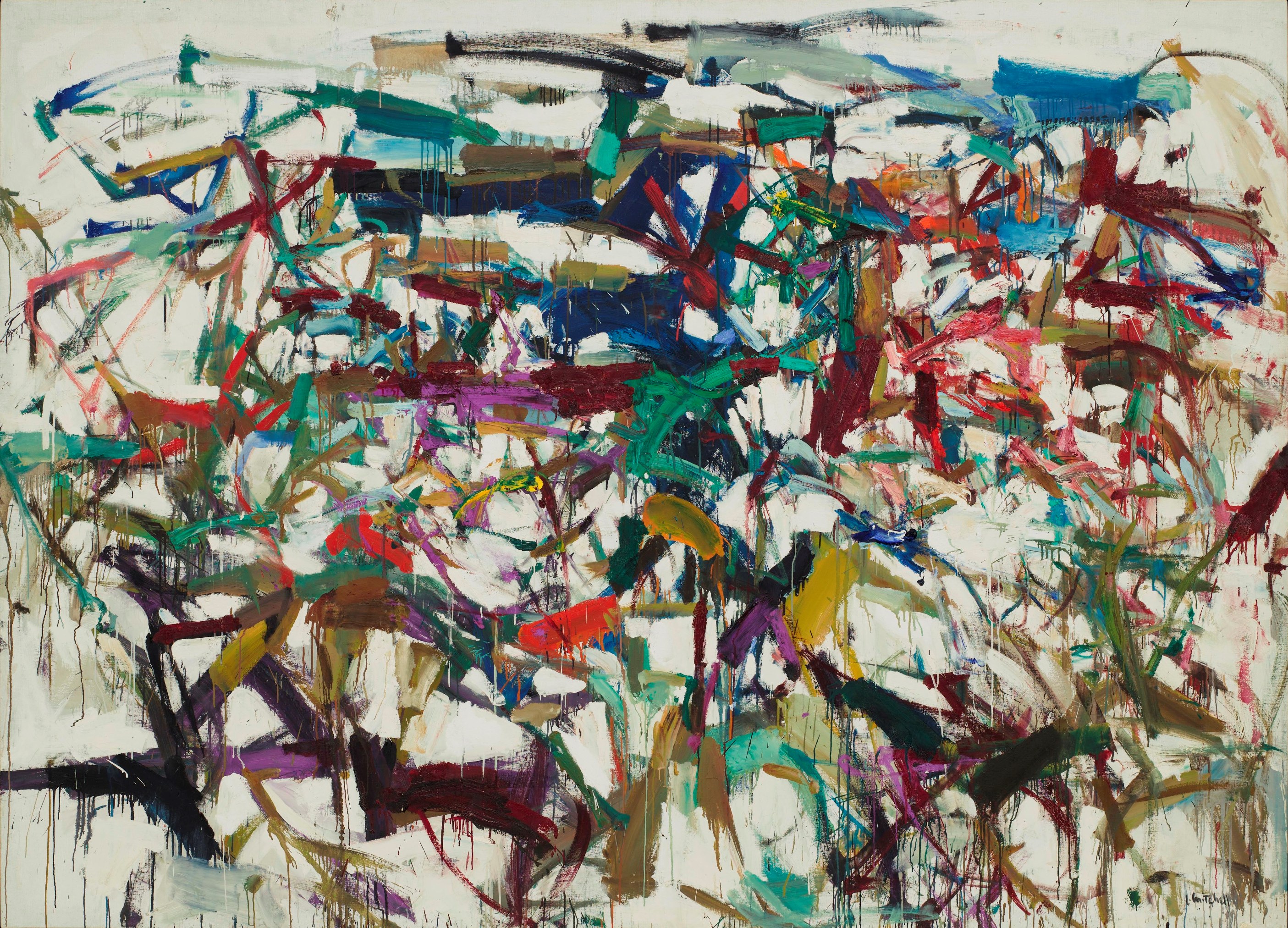
    Joan Mitchell (American, 1925-1992). Ladybug, 1957; Oil on canvas;6′ 5 7/8″ x 9′ (197.9 x 274 cm). The Museum of Modern Art. Purchase © Estate of Joan Mitchell.Photo credit: The Museum of Modern Art, Department of Imaging Services, Thomas Griesel

         In the last room, the Canadian born Philip Guston begun with pure painterly gestures, to start and finish his canvases in one session, not to stop, not to look at it, just stay close to it and paint, which produced one of the happiest painting I’ve ever seen (Painting, 1954) with its deep, energetic, pink strokes. Later he decided to depart from abstractionism in order to tell stories in cartoonlike compositions (Edge of town, 1969) and his painting is the last work in this amazing show.  


  • Electric Eclectics #6

    by Ashley Johnson

    July 29 – 31, 2011
    Meaford, Ontario

    I have wanted to attend the Electric Eclectics Festival since coming to Canada in 2005 and finally got an opportunity. Gary Silverberg of Art Condos, who is one of the EE sponsors, rolled out a press limo for the occasion, thoughtfully providing fluids and snacks. So, on a sweltering Saturday, we tumbled out onto a hillside descending to a meadow at the ‘Funny Farm’ in Meaford.

    Gordon Monahan was on hand to greet and orientate us. He is one of the organizers and is also an accomplished musician and sound installation artist. An impressive retrospective of his work has just been seen at several public galleries in Ontario.

    The main stage acts were scheduled for late afternoon so I went exploring, hoping for respite from the sun. People camp for the weekend and the hillside was dotted with colourful tents. They bring their own libations too, which was an unfortunate omission on my part. Luckily food and other cold drinks are available.

    This festival was not just about sound and included a number of interesting art installations, some malevolent robots, 3-D video and DJ-ing in the tent. There was a lot to see and do, including visiting the nearby beach for swimming.

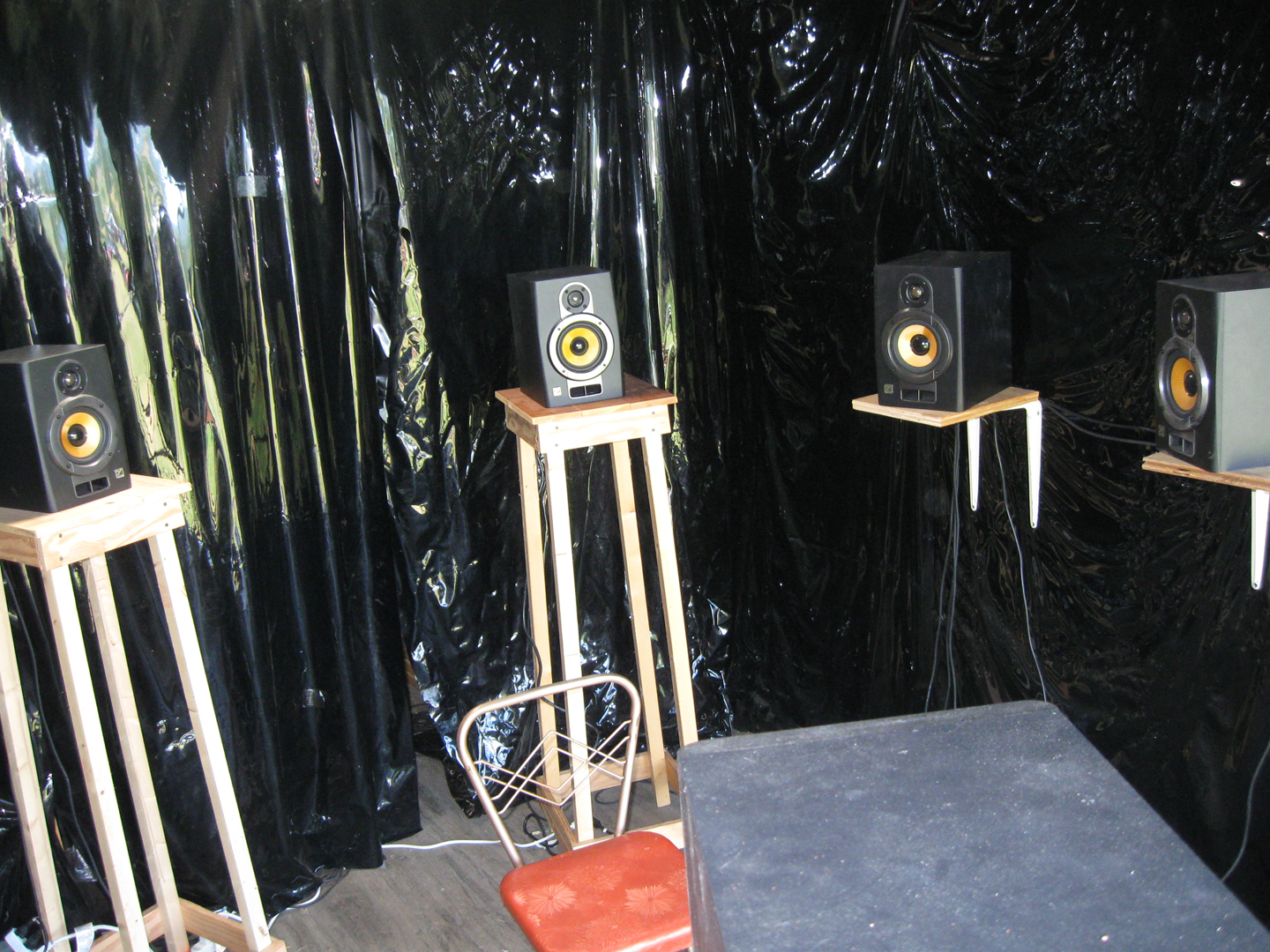
    TONSPUR by Georg Weckwerth and Peter Szely. Photo: Ashley Johnson

    The first acoustic installation I encountered was Austrian Astrid Seme’s entrancing ‘Urbirds Singing the Sonata’ (TONSPUR 41). TONSPUR is a permanent sound installation series curated by Georg Weckwerth and Peter Szely in Berlin, Vienna and Prague. Seme’s piece consists of a circle of speakers around a swivel chair. Each speaker emits a cycle of different bird sounds that swirl around the listener.

    Stuffed monkeys. Photo: Ashley Johnson

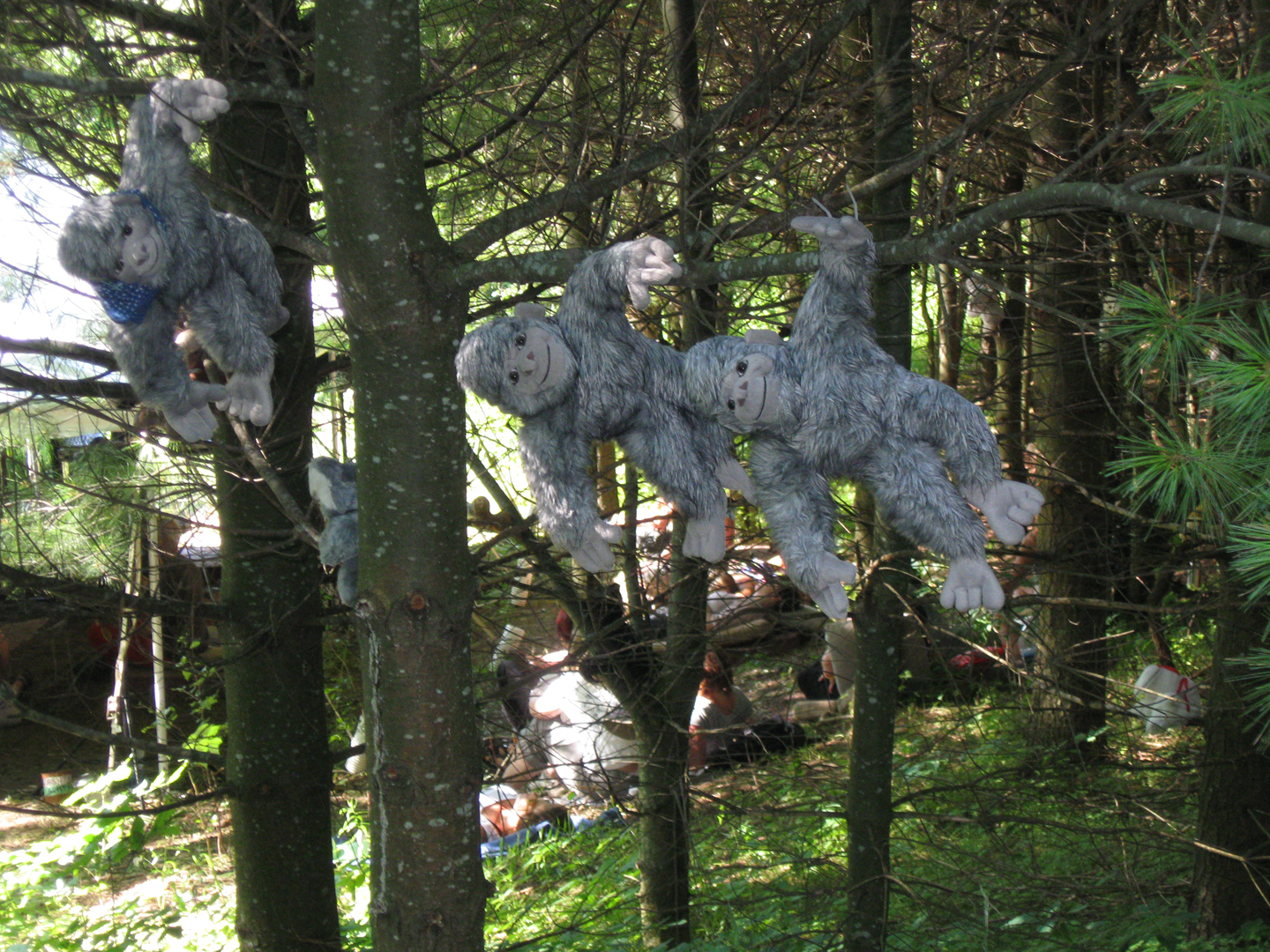
    Then, I staggered off down the hill into the forest valley where the DJ tent was situated. Stuffed animal toys lashed to branches are an odd touch. Sunda Duo Andrew Timar and Bill Parsons were playing soothing acoustic Indonesian instruments in the Gamelan tradition featuring a 20 string plucked zither, bamboo flutes, kacapi and traveling guitar. This tradition requires paired instruments to be tuned to one another slightly differently so that interference beats are created, causing a buzzing sound quite different to Western tuning.

    Next I visited Hilary Martin’s tent installation – Public Displays of Affection, where several wooden robots waited on a paper surface for the unwary. Hilary handed me some lipstick with the injunction to apply it. Hilariously I put it on my own lips not realizing that it was intended for the wooden lips of the robots! Duly applied and set, the robots respond to kissing noises that trigger a smack on the page.

    Toy tower. Photo: Ashley Johnson

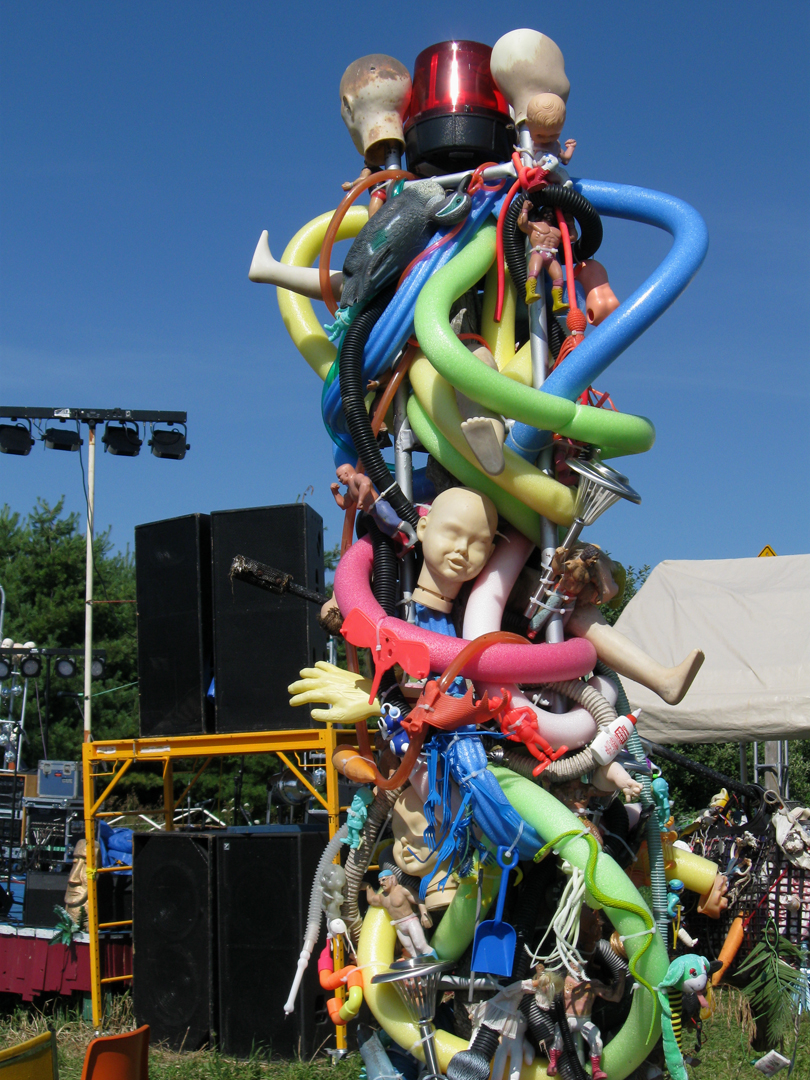
    Gathering remaining dignity, I set off for the main stage and the first act. The stage itself is eccentric with pillars of colourful toys and leaping stags. Audiolodge led the way with an interesting set. Kevin Curtis-Norcross, Troy David Ouellette and Paul Walde interact with speakers using a variety of implements like violin bows on stretched wire. Lesley Flanigan (New York) also exploited the capacity of speakers and microphones, using feedback and amplification. Sitting, surrounded by prepared speakers, she vocalizes and gets the sound swirling around her, reverberating and establishing a chorus. It was hauntingly beautiful.

    The heat on stage was intense for the performers as Torontonian Isla Craig and her guitarist Colin Fisher melded a more folk/trancelike music. The vocals and guitar had a lot of echo and reverb. Her voice was mesmerizing in its melodic flux.

    With the sun’s dying rays, Idiot Glee aka James Friley of Lexington, Kentucky played a set. He layers recordings of his voice adding organs and bass lines to create rich choral textures. The songs are reinterpretations of pop songs like “That’s All for Everyone” (Fleetwood Mac) that slowly and hypnotically unwind into the air.

    Nihilism Spasm Band. Photo: David Hlynsky

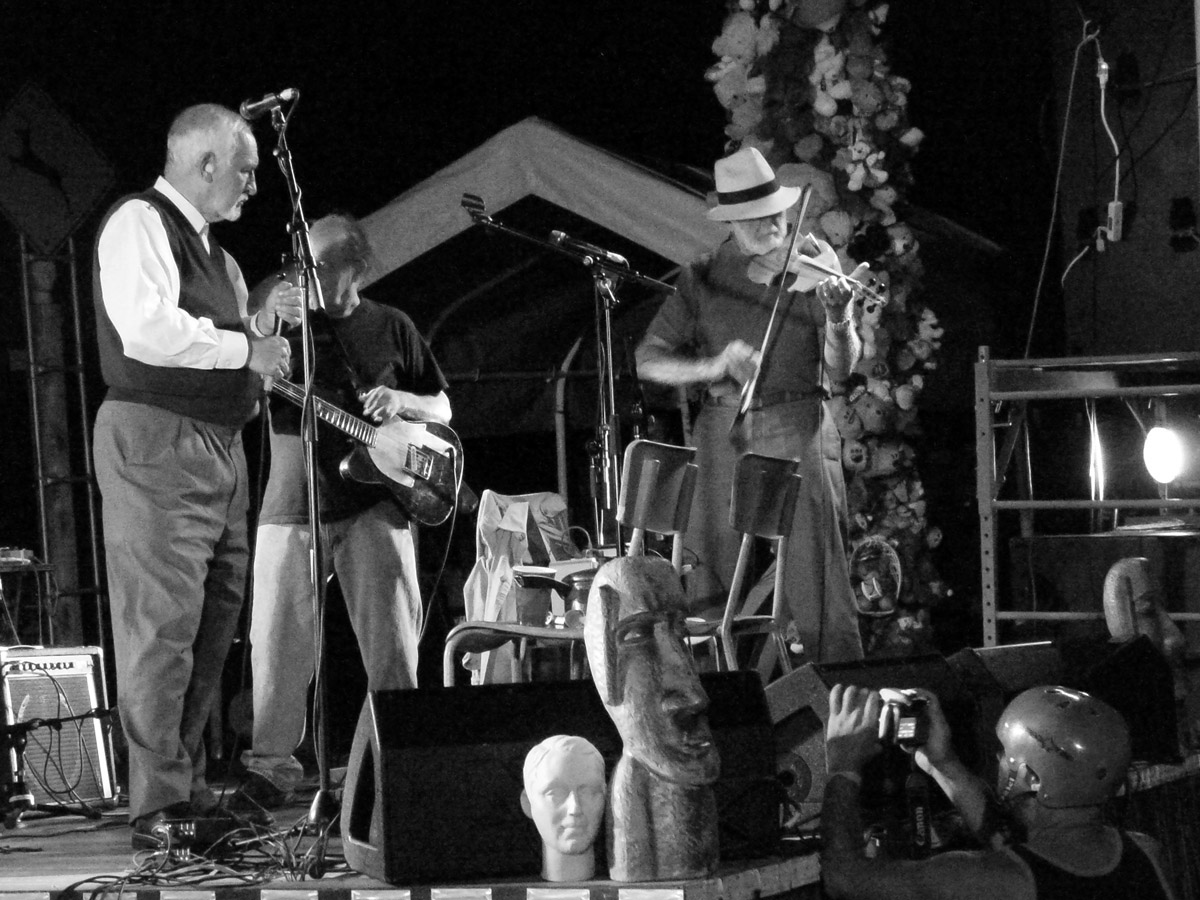
     Later, the Nihilist Spasm Band from London, Ontario with guest Alexander Hacke (Berlin) smashed into the night. Formed in 1965, they have international repute as one of the first noise bands. Vocalist Bill Exley delivers a manifesto of political discontent about ownership or meat eating before the band launches into full-bodied improvisation using odd instruments like electric kazoos and pots alongside altered or built guitars and drums. They swept the night before them like a wave.

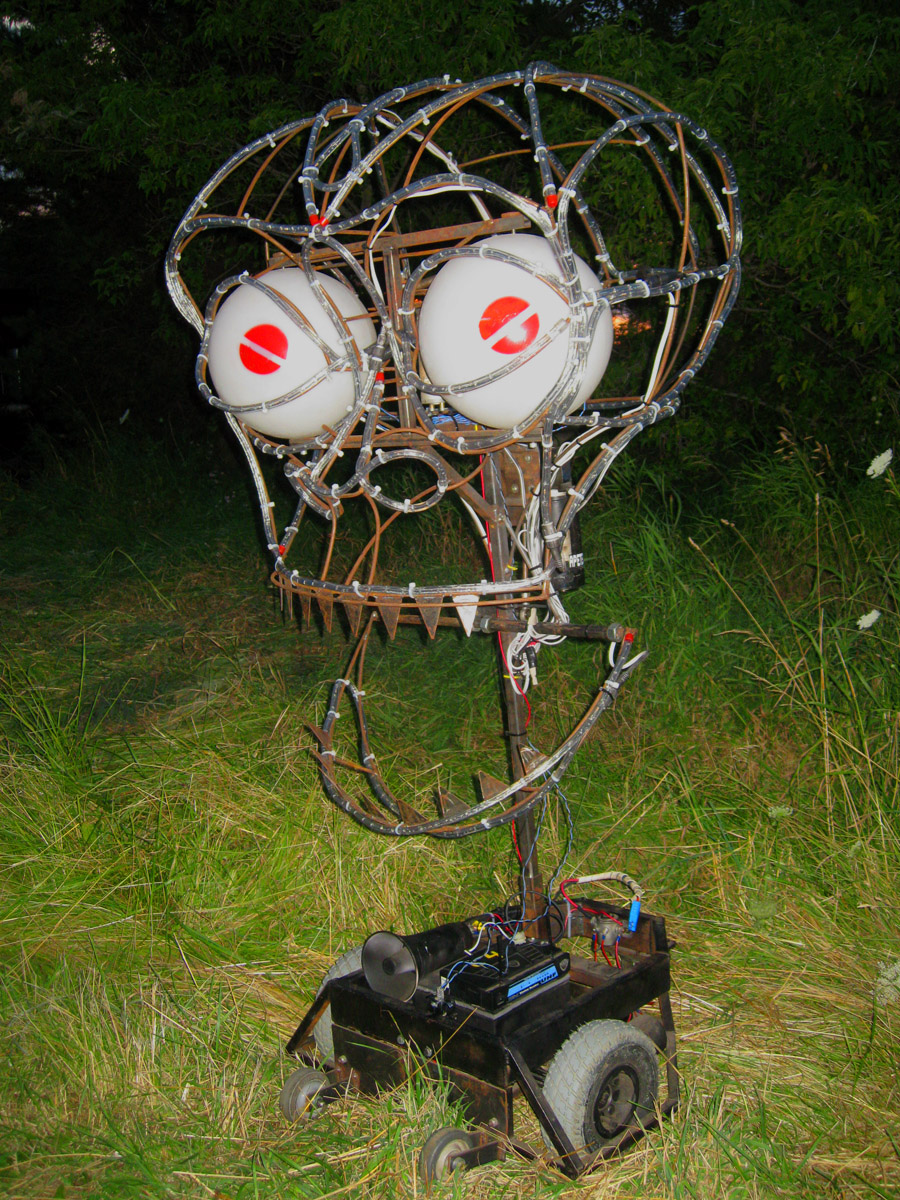
     Various other interesting acts punctured the evening but unfortunately it was time to catch my taxi back to Toronto. Winding my way back I was confronted by the malevolent robots of Apetechnology, a former collaborator with Survival Research Laboratories. One of these remote controlled contraptions had a wild, swinging drum that flashed light and sound at knee height. The other had steel teeth and rolling white eyes. It came up to say “I seeee you” in a mechanical voice.

    Apetechnology. Photo: David Hlynsky

     I took one final look into a trailer showing Willy Le Maitre’s 3-D video Outlook Expressed. This seemed like a primordial event as seeds transmogrified into other forms while seeming to be situated just in front of the screen. Sky and earth had traded positions.

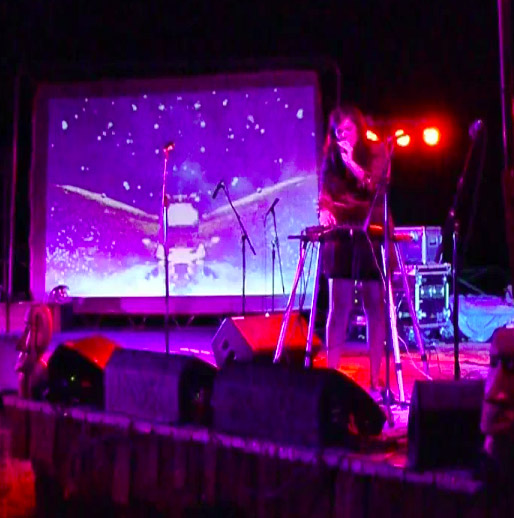
     Julianna Barwick. Photo: David Hlynsky

    On the whole this festival is thoroughly entertaining and educational. I noticed that many of the audience are regulars and come geared for a party with lasers and flashing lights in their hair. Next year I’ll be back to camp.

    For links to the artist’s sites to listen to their music and further information on Electric Eclectics see http://www.electric-eclectics.com .

  • Kevin Schmidt : “Don’t Stop Believing”

    By Matt Macintosh

    Curated by Barbara Fischer
    June 8 – August 20, 2011
    Justina M. Barnicke Gallery (Hart House), University of Toronto

    Angel of Light
     

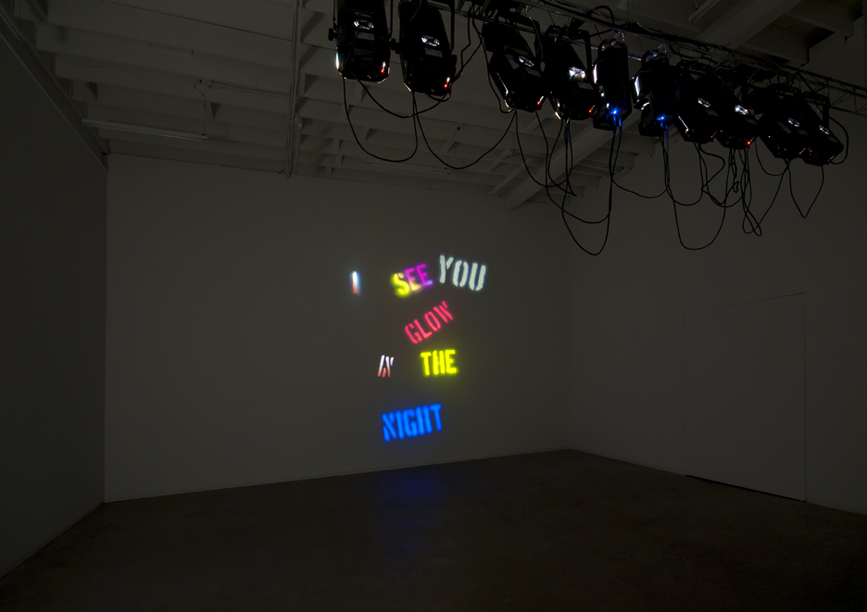
     Angel of Light  is the title of a song by seminal Christian rock band Petra. And if you turn right upon entering Kevin Schmidt’s exhibit, Don’t Stop Believing at Justina M. Barnike Gallery, it is also the title of the first work you’ll see. Schmidt has projected individual lyrics from the song which hazily takes aim at the simulated light generated by evil to lure good Christians away from God’s one true Light. Stage lights inscribed with the unlikely names, Intimidator and Intimidator 2 hold gobos which atomize Petra’s harangue into a discordant cycle of moralizing aphorisms whirring and squeaking their way onto the viewer and around the room. As pink, cyan, red, and yellow light is cast, a sort of critical calm is experienced, swapping gravitas with humour, charm and character. It’s a reflection on the kind of rock and roll hype machinery presumably used by Petra as a means to draw fans into their fold.

    Burning Bush

     Burning Bush (2005) is a five-hour single channel video of a sage brush in the B.C. desert-interior trimmed with flapping paper simulated flame-lights. Tawdry treatments of religious discourse are low fruit, but Burning Bush’s stable, unflinching formal arrangement which yokes foreground to background reaps rewards here. Again, with knowingness Schmidt takes religious cliché and presents it in a jokey way to invert the sublime character of representations of sublime subject matter. A background desert mountain vista offering a nod to the Kantian sublime (something like fear/joy at the overwhelming enormity of Nature), and the foreground mythic-narrative of God speaking through an angel through a bush, are compositionally stacked one atop the other in a tension for command of our attention and link to a gaff in religious translation: did God speak to Moses through seneh, a bush; or Sinai, a mountain? Which all at first seems hokey and clever and funny, but then plays out in experience as an unapologetically artificial stimulator of open, contemplative and meaningful personal moments.

    Epic Journey

     Subtle changes that occur in the natural backdrop add a temporal element both to Burning Bush and Epic Journey (2010), a single channel woEpic Journeyrk featuring a man drifting down B.C.’s Frasier river in a small trolling boat outfitted with a projector screen showing Peter Jackson’s entire eleven and a half hour  Lord of the Rings film trilogy. In this case the temporal element is unjoined. In comparison to the relentlessly lulling real-time progression of the drifting boat, the movie moves around in dramatic edits of time and space and, in spite of its epic length, progresses instantly as it traces its own story. Both stories are traced, of course; both have preordained paths. And both trace language, visual storytelling and audible storytelling-cum-commentary onto themselves and onto each other. Here Schmidt relaxes and tenses role-playing within a discourse of understanding between sense-maker and object of inquiry; map and terrain;  between the interaction of conceptualized experience and experience-as-actually-lived as it unfolds spontaneously. A formal and conceptual tension is anchored by a wonderfully placed light aboard the boat. Echoing lights on the shoreline, it draws ground into figure and works as a marker—an artificial, fixed point of reference to aid orientation (counter-pointing the stars in navigation to God in the spiritual realm). Finding one’s place is constituent to a work which is almost certainly understood as having no beginning or end. One inevitably arrives and leaves somewhere in the middle, personal responses having been shaped by the interaction of the two major plot elements in the video. They beg the question,  “Just how ‘epic’ is something half-done?” This seems to frame the work within the hyperbole of the leisure activity of boating and slacker culture movies, somewhere between the pathos-saturated metal ballads of bands such as Petra, quest-driven 16-bit video games, and Bill and Ted’s Excellent Adventure – all which  continue to resurface and reinvigorate culture in varying degrees.

    A Sign in the Northwest Passage

     A Sign in the Northwest Passage is the most directly political and interventionist work. Although it instrumentalizes certain recurring concerns and practices including a witty sort of rustic and theatric self-effacement, it seemed the odd man out among curator Barbara Fischer’s otherwise very coherent show. The artist went to some lengths to install a routed sign made of cedar boards in a remote spot in Canada’s far north that will float off after the summer ice-melt. The sign looked Photoshopped in the images, though we have enough clues to assume it’s not. Using the book of Revelation (yawn) to provide commentary for capitalist imperialism enabled by climate change, the work takes on certain practical, material and aesthetic features of the Klondike era gold-rush, and goes for the old, “looking back to imaginings about the future from the perspective of the now” in order to try to overlay something vaguely ominous (or jokey ominous) about the now, much like Petra’s own strategies. The accompanying artists book, Journey (also the name of the group behind 1981’s, Don’t Stop Believing) is about the process: travel, construction, seeing the work unassembled, assembled, installed, and so on. So too, are a pair of traced or projected watercolours which I thought fell particularly flat. In spite of serving in part as documentation of the artist’s own experience, they didn’t escape looking like patronizing, incomplete Tim Gardeners: dauby realist faux naïve ‘genre’ pictures of the leisure pursuits of working-class provincial-types.

    Schmidt wryly and deftly pairs religious and pop-cultural cliché to purge a tendency toward the reification of either. In Shmidt’s whirring bouncy meandering through à la carte Christianity, doctrinal sentimentality takes on a charm in its own right as an obsolete provider of “special” effects. This sort of knowing rock-tinged simulated stimulation makes for some lovely moments: quiet contemplation precipitated and guided by external phenomena so self-undermining that it’s nearly impossible to fall into idolatry. What I found particularly admirable is Schmidt’s ability to effect a transformation in attention toward the mundane. What, thankfully, is not purged is, as the exhibition’s title may suggest, an invitation toward attentive light-heartedness—something equally worth bringing to the church or the arena.

  • Interview with Stuart Keeler, one of the curators for Scotiabank Nuit Blanche, 2011

    Interview With Stuart Keeler ( SK )
    Curator & Director LEITMOTIF

    An Independent Project Produced for Scotiabank Nuit Blanche  2011 .
    Sponsored by: The Parkdale Village BIA.
    Questions are from Phil Anderson ( PA )

     PA: You also have 6 site-specific projects that are “the result of integrated community collaboration”.

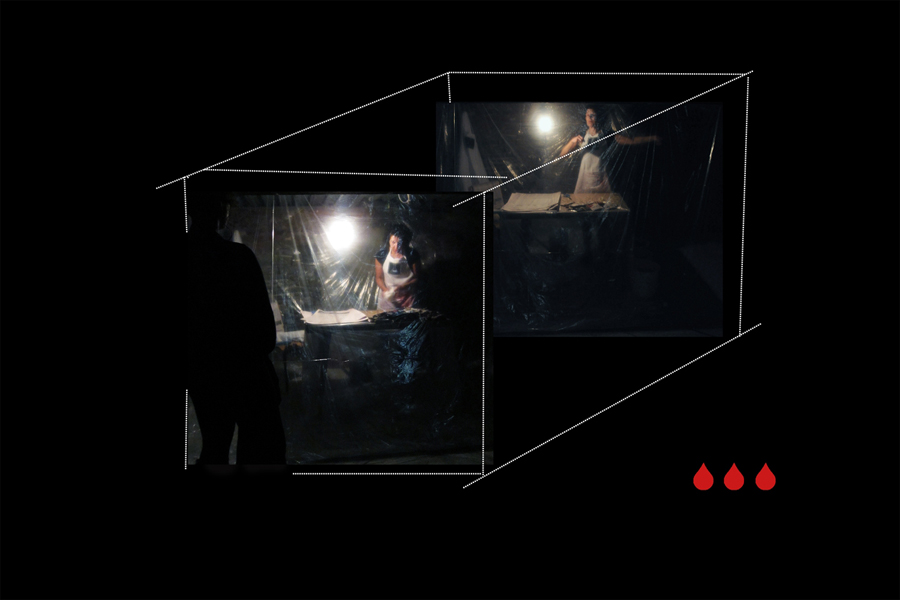
    SK: Those projects are funded by “The Brazilian Biennial Foundation”, by Marcia Vaitsman, from Sao Paolo, held a community series of workshops at the Parkdale Library.  The artist is interested in how Parkdale is portrayed in the media, and what the local resident thinks of this portrayal.  What began this approach is the vast number of languages that are spoken in Parkdale Village on a daily basis.  How can an artist project touch upon and engage with what people are thinking?  Can this culling of information be realized into a sculptural and audio experience? The interviews will culminate into a series of radio broadcasts the night of Scotiabank Nuit Blanche – LEITMOTIF with video, audio, and other interactive tactile gestures. The artist also has cemented herself with numerous visits to Parkdale and Toronto to collaborate with residents and has held several round table discussions – all to be revealed the night of the LEITMOTIF. Another interesting and smart project is by Caroline and Gord Langill, a work about AIDS, Opera and the power of the archive to record a friendship, activate our group memories as a culture. A very powerful and memorable work.

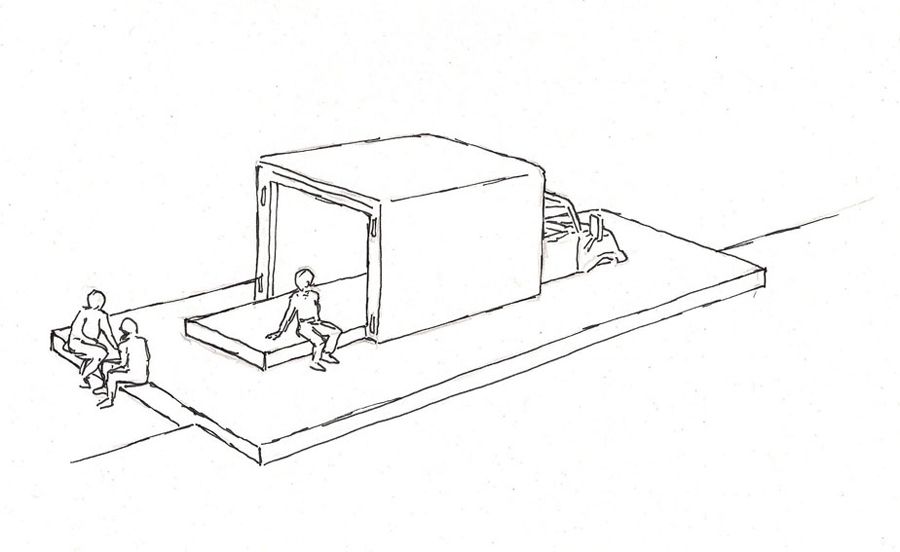
    (Truckstop), Alexandre David, Concept Sketch for LEITMOTIF


    SK: The goal is to not use– LEITMOTIF as a “plop art” experience of working or as an exhibition experience.  Yes, the projects are temporary in nature, however the process leading up to the dawn to dusk event can be interesting, inclusive in the production and planning. The goal is to introduce the artist into the neighbourhood and then create an in situ “residency” within the urban fabric of Parkdale.  This allows the neighbourhood as a site to inform the artist in the final development of the piece.  This connection creates stronger community activation, a dialogical action where art and the residents and merchants of Parkdale Village engage.

    Another interesting project is by Patrico Davila and Dan MCafferty – operating as Public Design Unit , the team is using Google Maps as a platform of how people see, experience and view the intersection at the Parkdale Public Library along Queen Street West at Brock Avenue. The artists are interested in a series of visioning workshops to spur dialogue about the aesthetics of the intersection and how it is viewed.  The final result is an engaging, relational work of video, based upon ongoing urban conversation and more to be composed by the artist team the night of Scotiabank Nuit Blanche.  The multiple workshops are free, and the computers are loaned from OCADU.

    PA:Have any of those projects started? How are they integrated in the community? Would it be something that is very obvious or is it meant to be more subtle?


    PA: The exhibition you mention is about how we relate to the city. Is this a way for the public to become more aware of public art and installation? Do you think the public is becoming more aware of this kind of art experience?

    SK: Many people have not been to Parkdale Village.  How do we conceive, think about and explore the city of Toronto?  LEITMOTIF is an exhibition platform based upon how viewers see the familiar in a new way. What is the ultimate déjà vu experience?  How does repetitive experience offer a new insight?  Can art really assist with this as a haptic experience?… With all these questions, the historic aim of Scotiabank Nuit Blanche should allow us as viewers a chance to see our territory in a new way.  Artists can assist us in doing this….Maybe the spectacle of previous years can be culminated to allow us a particular freedom to connect with art, ideas or even discuss the experience of living in Toronto in a thoughtful manner which encourages dialogue about the legacy of art.  Perhaps on some level the potential of art in public space on this night event will create questions and how citizens can re-imagine the future of this event itself.

     PA: You also refer to the future of social connectivity and the exhibition lending opportunity for people to think about it through this project. How do you see this happening?  Will people be able to participate in some portions of the project?

     SK: The social projects which may last in the community for some time will be evident, while others are temporary…here and gone.  The déjà vu experience of LEITMOTIF is to be experienced or translated by the viewer.  There are many interactive works, an interesting collaboration with The Gladstone Hotel as well as numerous Parkdale Village merchants and restaurants.  For example: The Workroom, an amazing concept sewing studio boutique along Queen Street West in Parkdale, is supporting two projects:

    One project by New York based sculptor Amanda Browder which is a community based sewing project – in a conceptual vein…this is not your grandmother’s sewing circle….this is a very amazing sculptural accumulation!

    The other project, is a theatrical production by Quality Slippers – led by Bekky O’Neil with live music, based upon a conceptual interlude with scale, artifice and humour…..The goal is to create an exciting environment, and to see the urban landscape in a new way – with an experimental artist project, we can expect repetition and alternative forms of looking and experiences to unfold.  Great for all ages, the piece is captivating and strong.

    PA: Has this project been different from others for you? What has the experience meant to you at this point in time?

    SK: Working with the Parkdale Business Improvement Association (BIA) has been a tremendous asset and learning experience.  Many people do not know what a Business Improvement Association does, or what this mini institution might be interested in. I encourage others to find out.  The urban fabric of Toronto is comprised of many BIA’s which produce festivals and other happenings.  The Village of Parkdale has a great source of energy in their local BIA, a group of people who program events, think and care about the area and the people who live and work here….I encourage people to get involved.

  • Chris Shoust: Communicating With The Mentally Ill

    By Phil Anderson

    Chris Shoust: Communicating With The Mentally Ill
    Process Gallery – Gallery 1313
    July 7-18, 2011

    Chris Shoust remembers drawing and writing about the world around him at an early age.

    He studied journalism in Windsor, Ontario, worked in radio and then in print in Sault Ste Marie. He continued to purse art and writing in Victoria , B.C. and later in Saskatchewan where he continued his journalism . He received his BFA in Sault Ste Marie and continued to paint.

    In his early twenties Shoust experienced mental illness and this was about to bring out this body of work – Communicating With The Mentally Ill. Shoust, still practising his journalistic talents   communicates  now through his art,  sharing this experience.

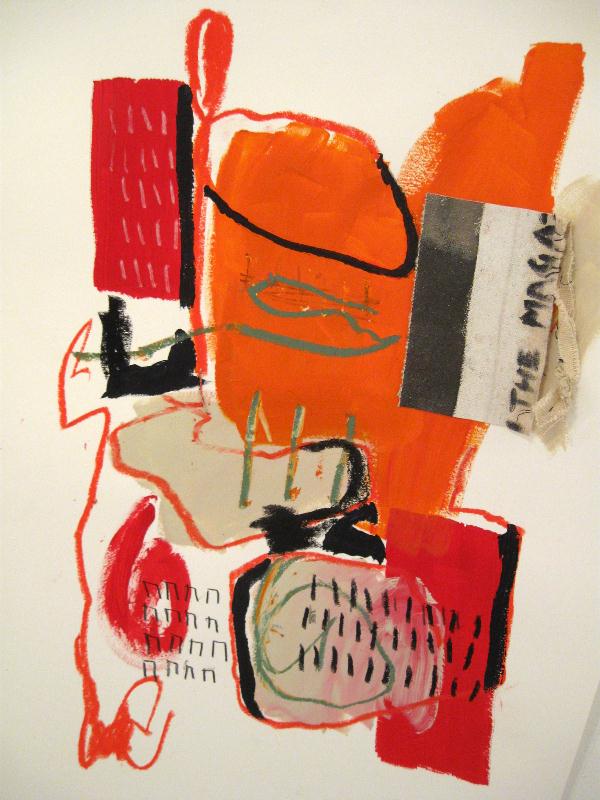
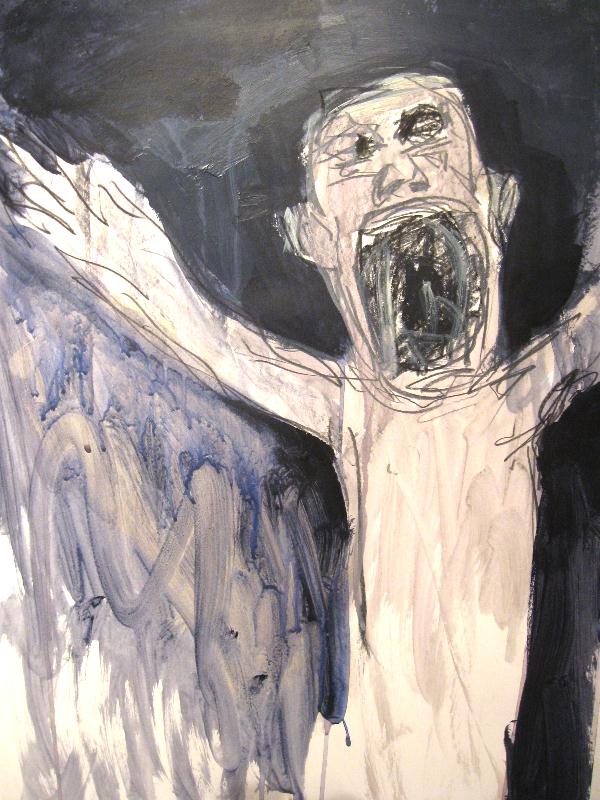
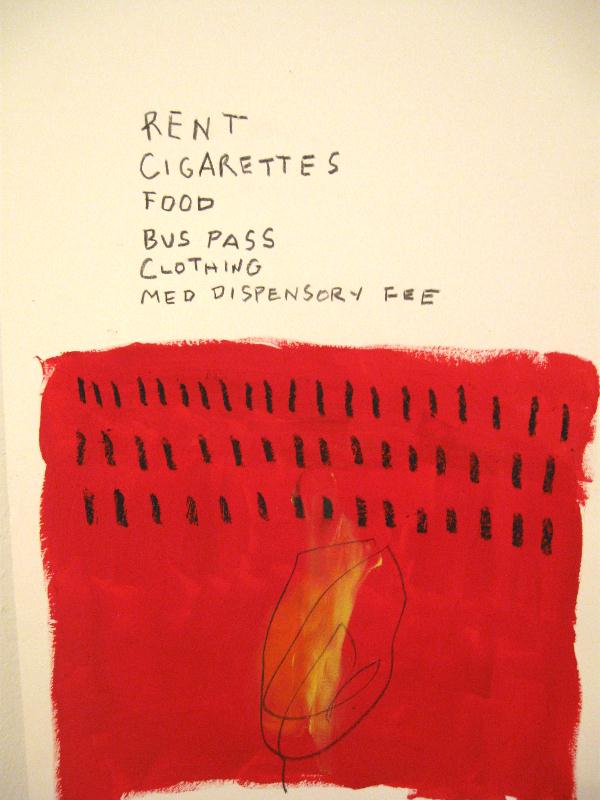
    Shoust joked with me saying” the more his art practise grows the more primitive his work appears “. His early work incorporated more realism. The messages in these recent works are not simplistic but effective in sharing the experiences of mental illness. Everything from housing issues to sexual dysfunction for the mentally challenged are addressed in this exhibit.

    Many of the works are colourful and pleasing to look at, occasionally using layers and mixing up the media while others are more graphically disturbing. Shoust displays his talent at putting together these graphic images and colour works. The exhibit was mounted in less of a traditional  gallery setting stacking the work and mounting it with push pins. The artist statement was handwritten to fit with the rest of the installation. There were no titles for the individual works. Shoust used various icons in his work to depict and communicate his experience with mental  illness . He effectively draws the viewer into his experience with these images. The whole exhibit with some fifty works was both imposing and powerful.

    Shoust continues to work as an artist in Sault Ste. Marie. More works of his can be viewed at www.chrisshoust.com

    Communicating with the Mentally Ill was generously supported by the Ontario arts Council

  • The Square Foot Exhibit

    August 5 – 21, 2011
    TWIST GALLERY
    1100 Queen St. West

    Phil Anderson asked a few questions of the coming up show from AWOL Member and one of the shows organizers  Nurit Basin.

    Anderson: What are the origins of the show? How did it come about and whose idea was it?

    Basin: Before the Square Foot show, we ( AWOL. Gallery & Collective ) would curate and hold themed group shows in warehouses where we would invite between 25 to 40 artists for each show. We usually held these exhibitions some time in the late fall. As much as we loved putting these shows together, we had a difficult time recovering the costs that went into such big productions. In the summer of 2003 we re-grouped and were brainstorming on how we can still invite a lot of artists to show but in a smaller space such as in our gallery at AWOL. Ross Bonfanti one of the AWOL co-founders and co-directors came up with the idea to restrict the size to a square foot. This way we can invite many artists and still be able to fit all the work in a more confined space. He suggested the square foot size because at the time he was working for a faux-finishing company where everything was charged by the square foot. We first invited artists we knew and then put an open call for submissions. To our surprise we ended up having over 150 artists respond to the call.

    Anderson: How has the show grown over the years and what, if any, problems came about with the growth?

    Basin: The show grew in size, one year I believe it was in 2008 we had over 900 artists and over 2000 pieces of artwork. I think the biggest challenge was communicating with so many artists regarding deadlines of dropping off the artwork, making sure all the artwork is accounted for during the show, and the pick-up of the artwork. At the end of each show we learn new things on how to improve the logistics and apply them to the following year.

    Anderson: What do think is the attraction for the public to go to Square Foot?

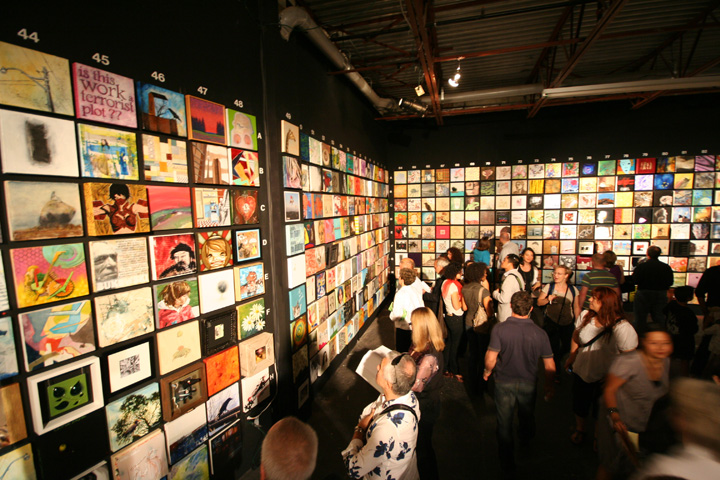
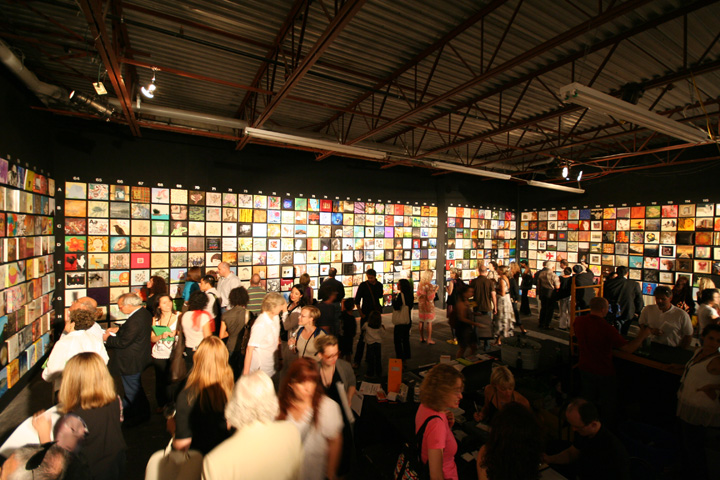
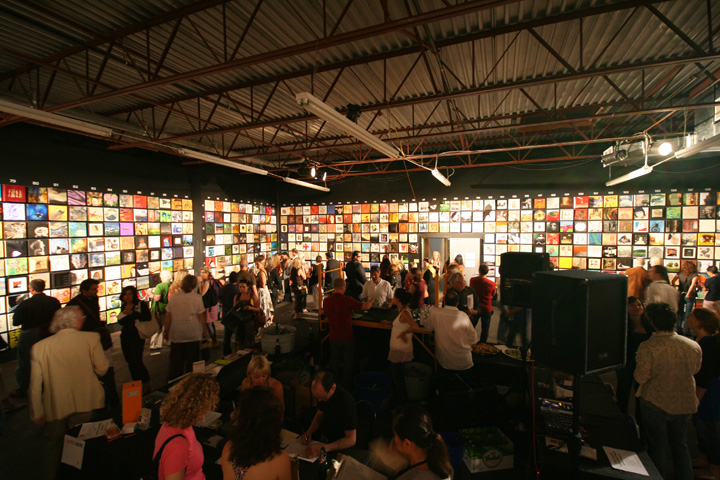
    Basin: A couple of things such as the number of artists that take part in the show and the number and variety of works that are exhibited in one room. Once all the artwork in hung it actually starts to look like one big art piece which is the installation itself.

    It also evolved into a community event where the show not only brought a lot of different artists into one space but it also brought a lot of patrons who continue to come see the show every year and follow certain artists as well as discover new ones. We even have buyers who buy pieces to add to their own square foot collections they started at home.

    Anderson: It has moved location a few times. Where will it be this year? How long does it take to install the show?

    Basin: This year for the first time it will be held at Twist Gallery, located at 1100 Queen Street West just west of Dovercourt. It usually takes about 3 days to install and a day to verify the locations of the pieces in the database.

    Anderson: Is there any particular memorable moment from a past show that sticks in your mind?

    Basin: I think every year the memorable moments are always the line-ups we get during the artist’s opening receptions. We just can’t believe how many people are in line to see an art show.

    Anderson: What is the show this year  looking like?

    Basin: In terms of artwork, we’re not sure yet because the drop off is in a couple of weeks.

    Anderson: How many artists do you anticipate participating? Have there been many applications?

    Basin: Yes. We have over 600 artists registered to participate this year so far. So probably it will be in the range of 550-600 artists.

    Anderson: Has there ever been a predominant theme noticeable in submissions?

    Basin: Every year it varies, one year we had a lot of cat paintings, another year we had pears, last year or the year before it was the year of the portrait. It varies and that’s the exciting part as well to see what the artists are collectively and unconsciously working on.

    Anderson: How do you see the show evolving in the next few years?

    Basin: Other then moving locations, I think over time it evolves with the type of artwork we receive. It feels like we’ve seen everything, but every year we are still surprised and amazed at some of the work we get. Artists are always challenging themselves to see how their piece can stand out from the rest.

    Note: All works are 12 x 12 inches and sell for $225 .
    50% of the sale goes to the artist and 50% goes to AWOL Gallery
    Friday  August 5 is the Preview Gala Tickets are $20
    Saturday August 6  is the public reception
    Free- line ups are expected