Author: artoronto

  • 10th Annual Little Art Show


    October 18  –  November 6,  2011
    Opening Night Festivities, Saturday, October 22,  7-10 pm
    Live Auction & Party, Saturday, November 5,  7-10 pm,
    HANG MAN GALLERY
    756 Queen Street East (at Broadview Avenue)
    Toronto, ON M4M 1H4
    T: 416-465-0302
    hangmangallery@gmail.com
    www.ArtistsNetwork.ca.
    Hours: Tues to Sun 12 – 5 pm

    The Hang Man Gallery presents the 10th Annual Little Art Show. An Artists’ Network initiative, featuring small works by local, national and international artists. The event is part silent auction, with bidding continuously on the works through out the exhibition run and a live auction on November 5th to 20 inches by 20 inches works.

    In need of an art fix this fall? The show is sure to satisfy any hunger with the many varieties of works to choose. Like a Chinese dim sum feast, you can sample as much as you want.

    About the Hang Man Gallery:
    The Hang Man Gallery, an Artists’ Network initiative, is a venue where artists from all stages of their career can showcase their struggles with the gritty realities of contemporary life. Further information about the Artists’ Network and the Hang Man Gallery, including upcoming exhibits, can be found at www.ArtistsNetwork.ca.
  • Nuit Blanche 2011

    Murray Whyte published an article about Nuit Blanche 2011 and its future in The Toronto Star on Monday, October 3, 2011.

  • Nuit Blanche 2011

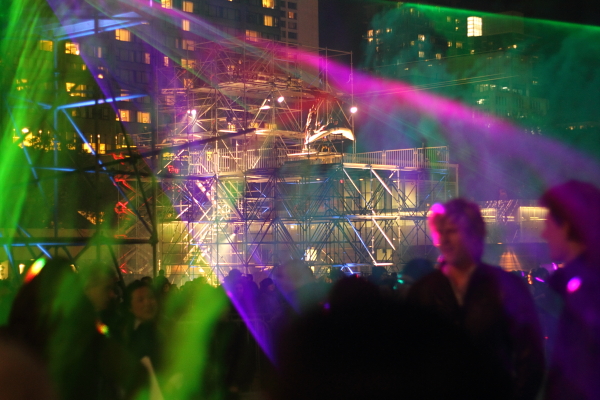
    Usman Haque and Natalie Jeremijenko, Flightpath Toronto, 2011. Photo by Mauricio Contreras-Paredes

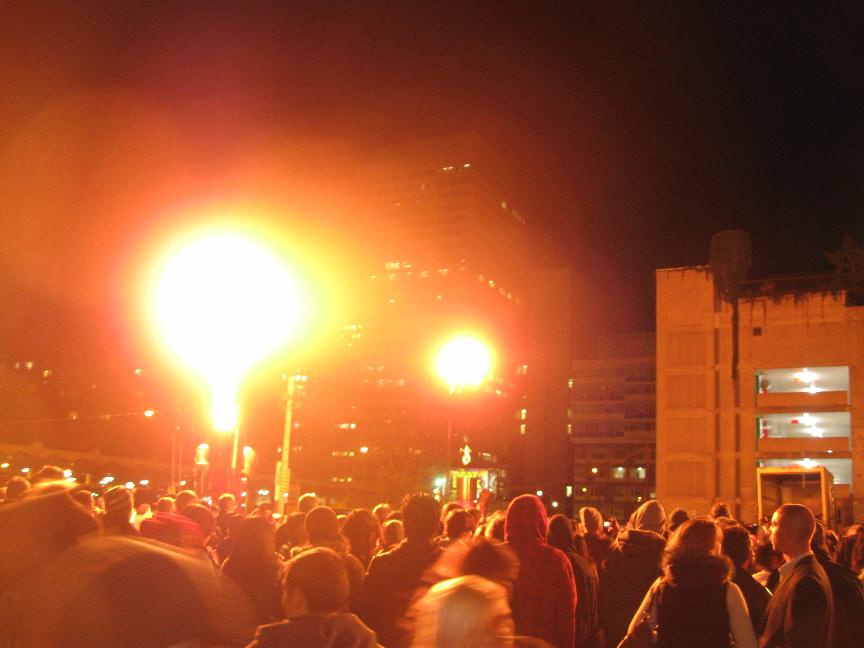
    October 2011’s Nuit Blanche was chilly indeed, but Murray Whyte’s aptly titled article seems to express a misdirected sense of frustration. Criticizing the fact that Nuit Blanche seems to dissolve into late-night, often dangerous revelling rather than focused engagement with contemporary art works, Whyte, suggests that this ungainliness is foreshadowing the end of Toronto’s all night happening. Ominous as his tone is, Whyte draws attention to important factors such as the declining financial assistance from the city of Toronto leading to a reliance on corporate sponsors, and the disinterested approach taken up by the many individuals whose attendance results from an attraction to the seemingly illicit roaming of the streets. But, while the unruly crowd lends a feeling of the carnivalesque, this level of attendance at an arts-based event is inimitable. Contending with boisterous crowds, especially when comprised of individuals taking advantage of a provided space in which to stay up late and party, is an inherent aspect of popular events. Attending a beloved band’s concert or an NFL football game involves a comparable atmosphere. While this can often compete with one’s enjoyment or appreciation of the event, bidding the whole production adieu doesn’t need to be the response. Nuit Blanche, while sharing the characteristics of other entertainment-based events, is particular in that it is intended to be a showcase of contemporary art; a conceptualized occurrence in which one can experience our urban space in an altered state. Rather than dismissively bid farewell, it seems as though the most productive outlook would be to find a way in which to positively channel the established energy and interest that Nuit Blanche has garnered so far.

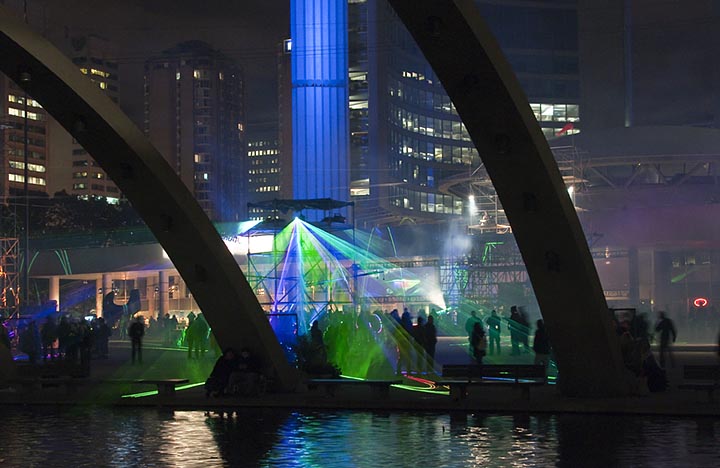
    Questions which need answering are abundant. How does a spectacular art event such as Nuit Blanche maintain itself as a dynamic exhibition of contemporary art works? How can the event manage a huge influx of people in the downtown core, throughout the wee hours of the night in a safe and conducive way? Comparing Nuit Blanche to other contemporary events proves that this collective and interactive manner of exhibiting and experiencing contemporary art has become firmly established. Contemporary works, many of which are intrinsically connected to the notion of participatory interaction therefore necessitate the involvement of lots of people. Yet how does an artwork, and an artist negotiate the precarious balances that are involved- are works created for such circumstances? Are they designed for the purpose of drawing a crowd, as, Natalie Jeremijenko and Usman Haque’s amusement park-esque attraction “Flight Path” seemed to do  with its laser light show and promises of flying with wings (and a zip-line) through the air above Nathan Phillips square. Negotiating the benefits and disadvantages involved in the spectacularization of an impermanent art exhibition is ultimately going to be a constantly fluctuating challenge.

    My own Nuit Blanche experience involved staying up the entire night and while it was much more positive than the night Whyte writes about, I was still left with the feeling that the timeframe provided an unrealistic space in which to experience art. For those who are less inclined to lose a full night’s sleep, the stress of negotiating the throngs of people that swarm the downtown core between 6pm and 3am, can diminish the effect of the art. Perhaps more guidance could be provided in the form of maps that not only describe the art works themselves, but define the atmosphere of different areas of the city, in order to direct those attempting to enjoy a night of art, or those who prefer a night of partying. Again this idea of presenting concept-based maps draws attention to the dilemmas provoked by this event: how do we deal with such a highly attended spectacular event, experience contemporary art in a tight time-frame, negotiate the theories and concepts in question, maintain criticality, and avoid the feeling that the experience is being fabricated and then simply consumed.

    Miriam Arbus

    Note: Murray Whyte published an article about Nuit Blanche 2011 and its future in The Toronto Star on Monday, October 3, 2011.

  • Nuit Blanche 2011

    Murray Whyte published an article about Nuit Blanche 2011 and its future in The Toronto Star on Monday, October 3, 2011.

    Here are some responses.

  • PAINTING:Toronto’s Modern Masters

    David Bolduc, Green Plateu, 1980, oil on canvas, 84″x84″

     October 15 – November 12, 2011
    Opening: Saturday, Oct ober 15, 2 – 6pm
                                                           CHRISTOPHER CUTTS GALLERY
    21 Morrow Avenue,
    Toronto ON. M6R 2H9
    T: 416 532 5566
    info@cuttsgallery.com
    www.cuttsgallery.com
    Hours: Tues – Sat. 11-6 

     Toronto’s Modern Masters:
     
     DAVID BOLDUC
    DENNIS BURTON
    RICHARD GORMAN
    TOM HODGSON
    JOHN MACGREGOR
    RON MARTIN
    RAY MEAD
    JOHN MEREDITH
    KAZUO NAKAMURA
    GORDON RAYNER
    WILLIAM RONALD
    HAROLD TOWN
     
  • Crossing Natures: Yvonne Housser, Janet Morton, Mélanie Rocan, Joyce Wieland

    Melanie Rocan  “Secrets”  2011,  oil on canvas.  60 x 84 inches

    October 14 – November 12, 2011
    Opening: Friday, October 14, 7-10pm
    Janet Morton and Mélanie Rocan will be present.
    Paul Petro Contemporary Art
    980 Queen St West
    Toronto, ON   M6J 1H1
    Tel: 416-979-7874
    info@paulpetro.com
    www.paulpetro.com
    Hours: Wed – Sat: 11–5

    Paul Petro Contemporary Art is pleased to present Crossing Natures, a group exhibition that explores a lineage in contemporary Canadian art originating in the work of Joyce Wieland (1931-1998) and found in the work of two younger generations of Canadian artists, Janet Morton and Mélanie Rocan. We are also pleased to present a painting from 1948 by Yvonne Housser (1897-1996) that embodies the spirit of this exhibition.

    Crossing Natures looks at the idea of thresholds, or liminal spaces, that convey aspects of our relationship to Nature. The exhibition also considers cross-generational influences and affinities.

    From Nell Tenhaaf’s text, Soft in the Head, August 2011:

    “The American ecofeminist Carolyn Merchant had published her landmark book The Death of Nature eight years earlier […] Merchant’s contribution to philosophy was to have a far-reaching influence and prove itself visionary in articulating how we have tamed, managed, objectified, atomized, and rationalized Nature […] Today it matters less which gender is responsible for the ever more rapid disappearance of Nature as a powerful and compelling force. It seems more important to reclaim that power in any way that we can.

    For this reason it is striking to see in Mélanie Rocan’s very recent painting Secrets images of being united with nature in the form of rituals that are definitely pagan and probably also pantheistic, invoking redemption through immersing in and conjoining with the natural world. And in Janet Morton’s She’s Come Undone the suggested ability to put back together what has come almost, but not entirely, asunder is as comforting as the pile of wool heaped on the floor. Interestingly, each of these artists leans toward abstraction in her own way. Rocan buries her figures within brushstrokes that speak to the Abstract Expressionists’ mantra of locating truthful experience in the paint itself, as both surface and gesture. Morton invokes AbEx painterly power in a similar way, for the authenticity of its rebellious energy…

    [With] Wieland’s large floppy painting, it seems to be asking how it is possible to still (even at that time) enter nature. And it proffers some answers to the question: by bird, by canoe, by identifying with the knowledge of aboriginals, by all of these intertwined […] This painting is so gloriously soft in the head in the face of a Nature that has been hyper-rationalized, that it has to have the last word.”

  • Marjorie Moeser: The Edge of Somewhere/new paintings

    October 13 – November 13, 2011
    Opening/ Artist Talk: Saturday, October 15, 2-5pm
    DAVID KAYE GALLERY
    1092 Queen Street West
    (entrance on Dovercourt)
    Toronto, ON M6J 1H9
    Tel: 416-532-9075
    www.davidkayegallery.com
    Hours: Mon – Tue: by appointment
    Wed – Fri: 11–6; Sat – Sun: 11–5

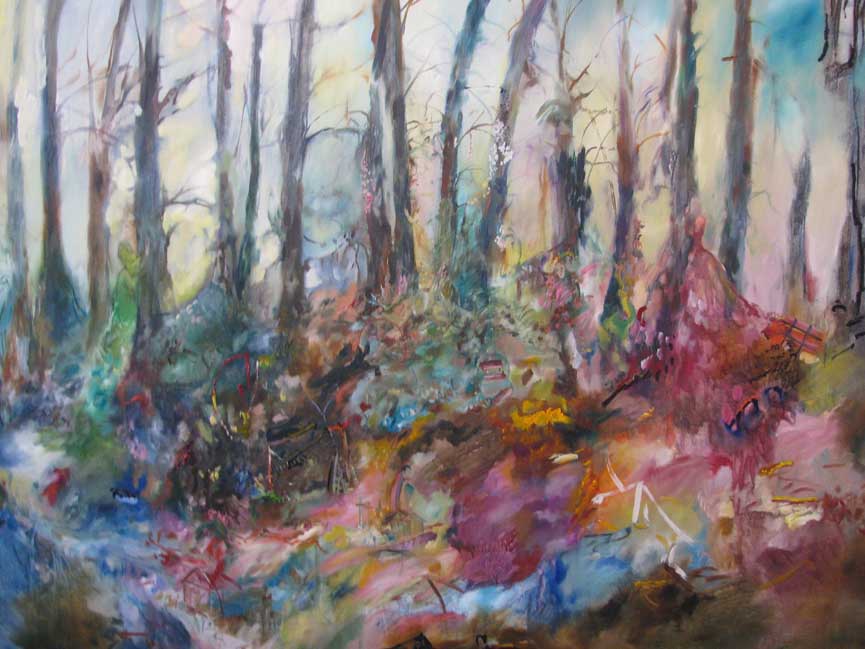
    This new body of paintings has come from an extended stay in the Mesilla Valley of southern New Mexico. Her morning walks take her through the pecan groves along levies that parallel the acequias (water ditches) where she could look out across vast open fields toward the Bishop’s Cap Mountains. The verdant landscape, the extensive swirls and brilliance of the sunlight, and the deep shadows made vivid impressions on Moeser, which subsequently fed the imagery captured here in her lush and extremely colourful paintings.

  • Faunamorphic (Figure #3) by David Hannan

    (polymerized gypsum, steel, polyurethane foam, wood)

    October 11 – November 11, 2011
    Daily until 12 am
    Roadside Attractions
    911 Davenport Road,
    Toronto, ON  M6G 2B7
    info@weseeinc.com”

     Métis artist David Hannan works with taxidermy-form sculptures to explore vulnerability, both in humans and in nature.  Hannan‘s taxidermic hybrids present tension and beauty in the merging of animals into sculptures and at the same time, suggest landscape in the gentle undulations of the forms.  Many of the themes in Hannan’s art derive from his aboriginal heritage, particularly his engagement with history and notions of territory.  His work utilizes taxidermy forms to make transformational sculptures that evoke responses of fear, aggression and endearment.

    Traditionally taxidermy forms have been used as the basis of a hunter’s trophy: the skin of an animal is stretched over the form to be preserved.  In Hannan’s work, animal skin is replaced with packing tape and wool felt blankets evoking a sense of fragility.  The blankets suggest a need for warmth, protection, shelter, love and understanding.  They can also suffocate or allow us to hide from our fears.

    You can see more on the artist’s website: www.davidhannan.ca/

  • Chagall and the Russian Avant-Garde

    To Russia, Donkeys and Others, 1911 (  A la Russie, aux ânes et aux autres, 1911), oil on canvas 157.0 x 122.0 cm. Collection of the MNAM, Centre Pompidou, Paris  ©Adagpl Center Pompidou, Mnam – CCi/Dist. RMN.

    October 18, 2011 – January 15, 2012
    ART GALLERY OF ONTARIO
    317 Dundas Street West,
    Toronto, ON M5T 1G4
    T:416-979-6648
    www.ago.net
    Hours: Tue & Thurs – Sun 10 – 5:30, Wed 10 – 8:30
    The Art Gallery of Ontario is bringing the magic, whimsy and wonder of Marc Chagall to Toronto  with a major exhibition organized by the Centre Pompidou. Chagall and the Russian Avant-Garde: Masterpieces from the Collection of the Centre Pompidou, Paris on view from, features the lush, colourful, and dreamlike art of Marc Chagall alongside the visionaries of Russian modernism, including Wassily Kandinsky, Kasimir Malevich, Natalia Goncharova, Sonia Delaunay, and Vladimir Tatlin.

    Drawn from the collection of the Centre Pompidou, the exhibition examines how Chagall’s Russian heritage influenced and informed his artistic practice, illustrating how he at turns embraced and rejected broader movements in art history as he developed his widely beloved style. Chagall and the Russian Avant-Garde comprises 118 works from a broad array of media, including painting, sculpture, works on paper, photography, and film. The artwork is drawn entirely from the collection of the Centre Pompidou and features 32 works by Chagall and eight works by Kandinsky.

    Chagall Ball

    Saturday, October 15, 2011
    At the Art Gallery of Ontario

    Chagall’s Musical World

    Koffler Chamber Orchestra presents Chagall’s Musical World
    Sunday, November 20, 3:00pm
    Walker Court
    Included with admission to the AGO

    Past Present

    Past Present: Chagall Through Toronto’s Artists
    Wednesday, December 14, 8:00pm
    Weston Family Learning Centre
    $20.50 Members| $22.50 Public | $10 additional to visit the exhibition

    Past Present

    Past Present: Chagall Through Toronto’s Artists
    Wednesday, December 14, 8:00pm
    Weston Family Learning Centre
    $20.50 Members | $22.50 Public | $10 additional to visit the exhibition


  • Nuit Blanche 2011

    Saturday, October 1, 6:59pm – 7.00am

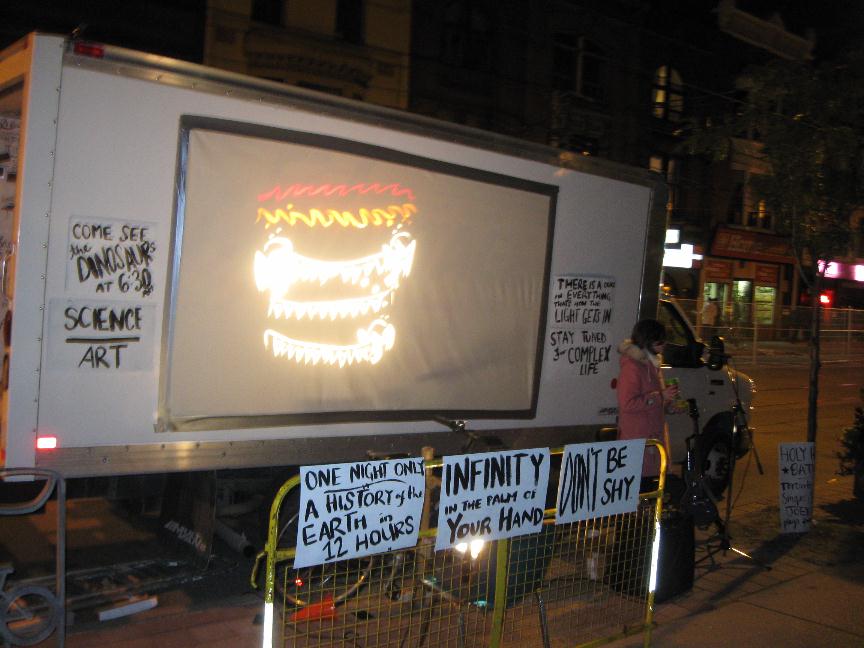
    From sunset on Saturday, October 1, to sunrise on Sunday, October 2, 2011, Toronto celebrated its 6th annual all-night contemporary art festival, Scotiabank Nuit Blanche, displaying over 130 works created by local, national and international artists.

    Zone A

    Karen Henderson, Slow Falls Rising, 2011. Photo: Phil Anderson

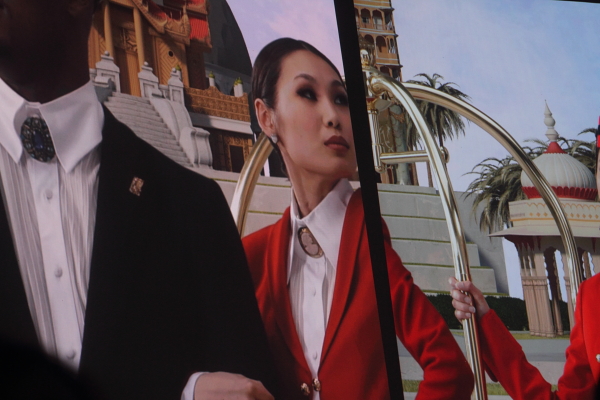
    AES + F, The Feast of Trimalchio, 2009-11. Photo: Mauricio Contreras-Paredes

    AES + F, The Feast of Trimalchio, 2009-11. Photo: Phil Anderson

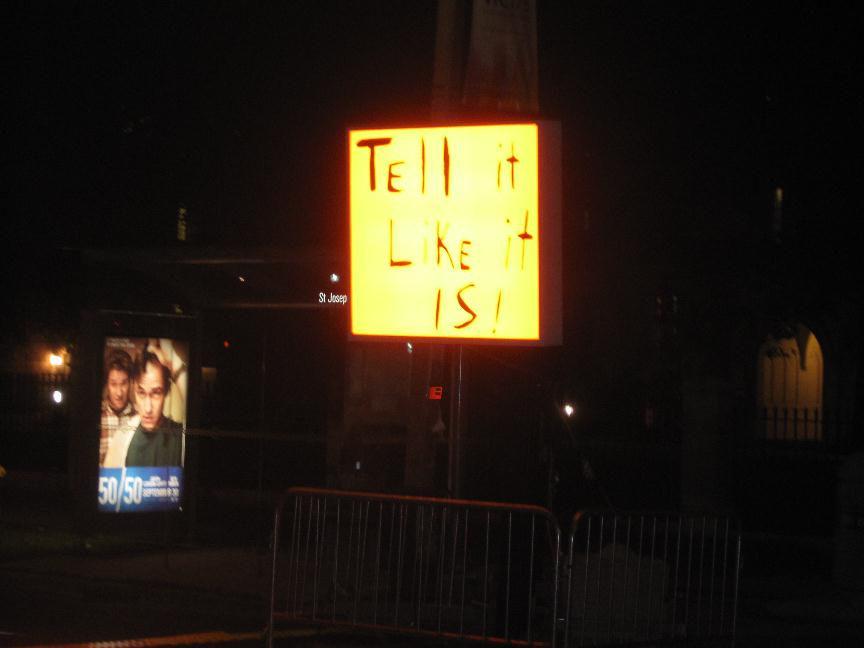
    Sam Durant, Electric Signs, 2002, 2008. Photo: Phil Anderson

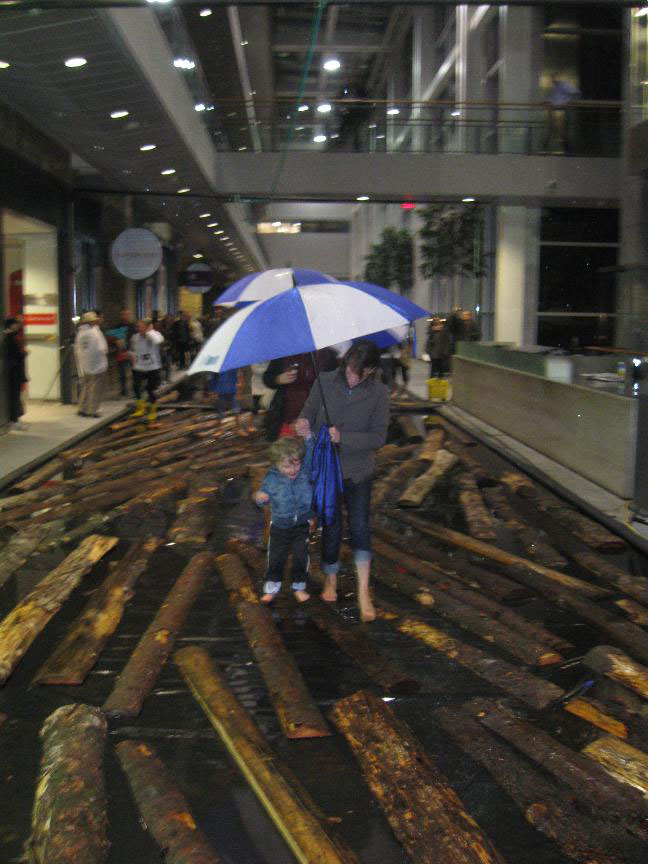
    Richard Purdy, L’écho-l’eau, 2011. Photo: Phil Anderson

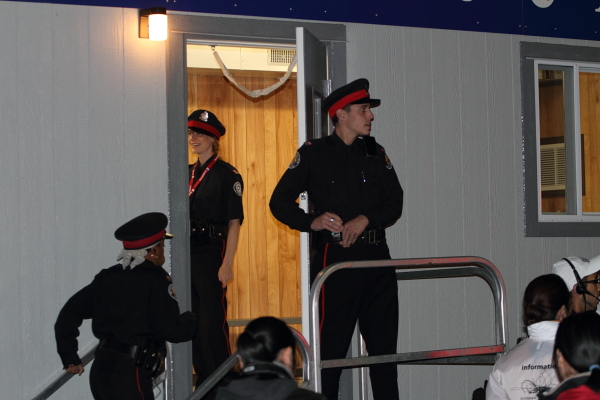
    Althea Thauberger, The Police Station, 2011. Photo: Mauricio Contreras-Paredes

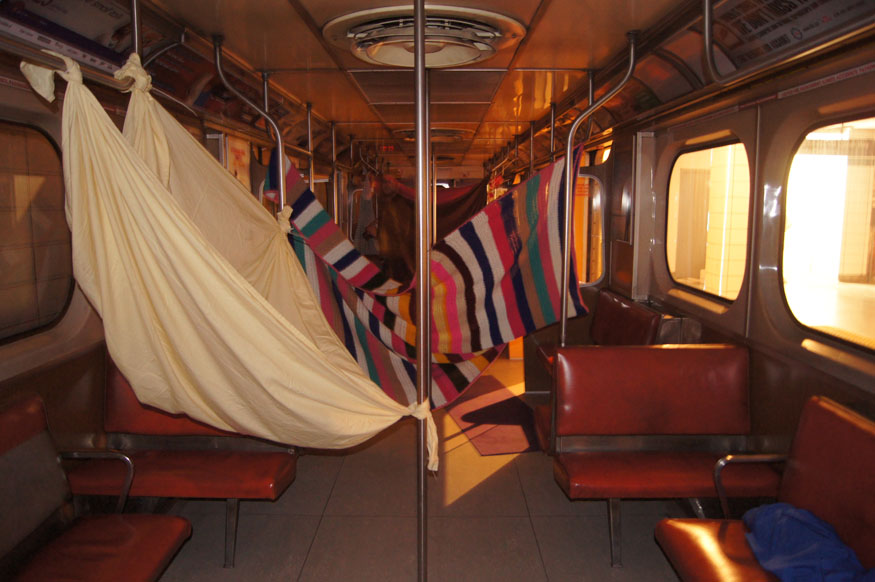
    Jessica Rose, A City Sleepover, 2011. Photo: Katherine Porter

    Jessica Rose, A City Sleepover, 2011. Photo: Katherine Porter

    Zone B

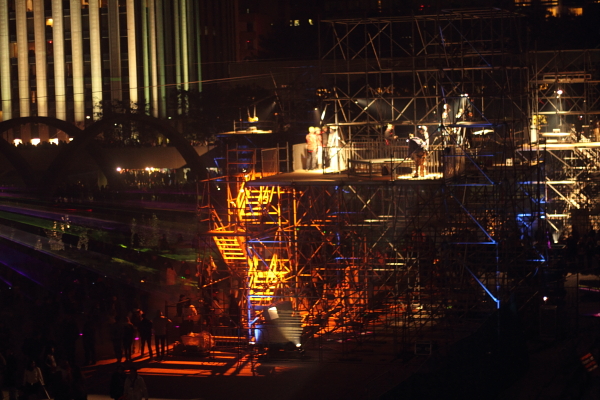
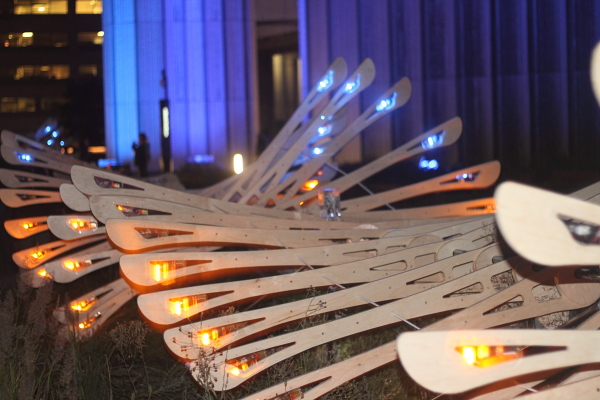
    Usman Haque and Natalie Jeremijenko, Flightpath Toronto, 2011. Photo: Mauricio Contreras-Paredes

    Usman Haque and Natalie Jeremijenko, Flightpath Toronto, 2011. Photo: Mauricio Contreras-Paredes

    Usman Haque and Natalie Jeremijenko, Flightpath Toronto, 2011. Photo: Adrian Oosterman

    GUILD, Through the Gorilla Glass, 2011. Photo: Mauricio Contreras-Paredes

    GUILD, Through the Gorilla Glass, 2011. Photo: Adrian Oosterman

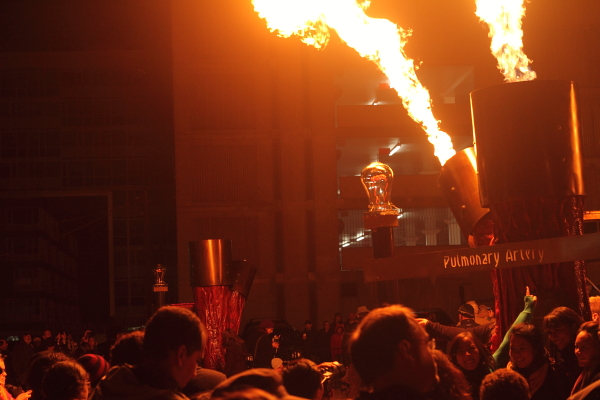
    Christine Irving and Interactive Art, The Heart Machine, 2010. Photo: Mauricio Contreras-Paredes

    Christine Irving and Interactive Art, The Heart Machine, 2010. Photo: Mauricio Contreras-Paredes

    Anthony Swan, Hillary Predko, Maihyet Burton, Denis Taman Bradette, The St. James Circus. Photo: Mauricio Contreras-Paredes

    Jean-François Bouchard, Still Life. Photo: Phil Anderson

    Zone C

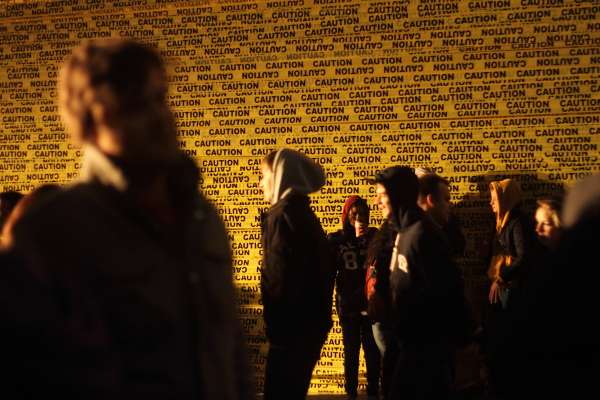
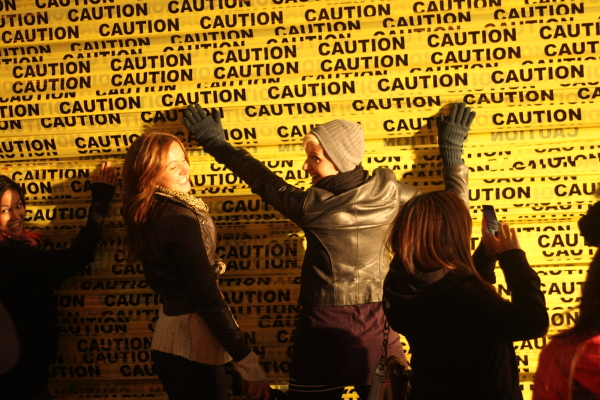
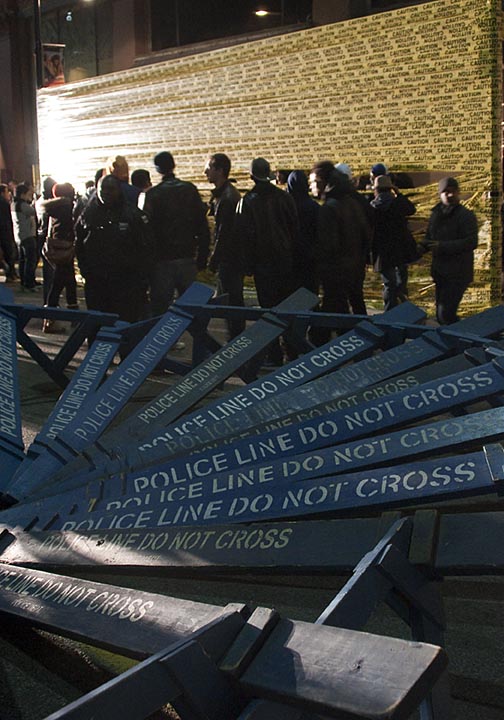
    Jeremy Jansen and Niall McClelland, Barricades, 2011. Photo: Mauricio Contreras-Paredes

    Jeremy Jansen and Niall McClelland, Barricades, 2011. Photo: Mauricio Contreras-Paredes

    Jeremy Jansen and Niall McClelland, Barricades, 2011. Photo: Adrian Oosterman

    LEITMOTIF: Cubes, group exhibition. Photo: Phil Anderson

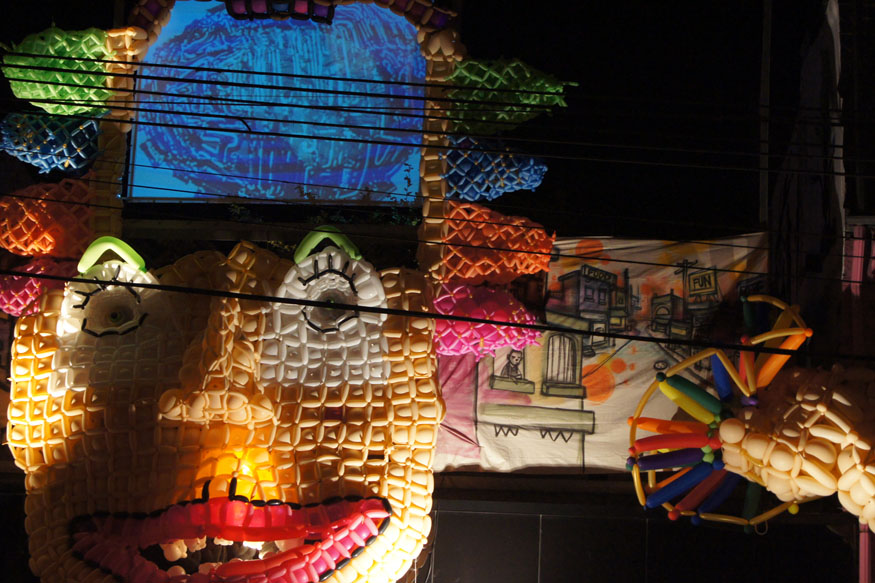
    Funhouse, group exhibition. Photo: Katherine Porter

    Text: Michelle Lun